

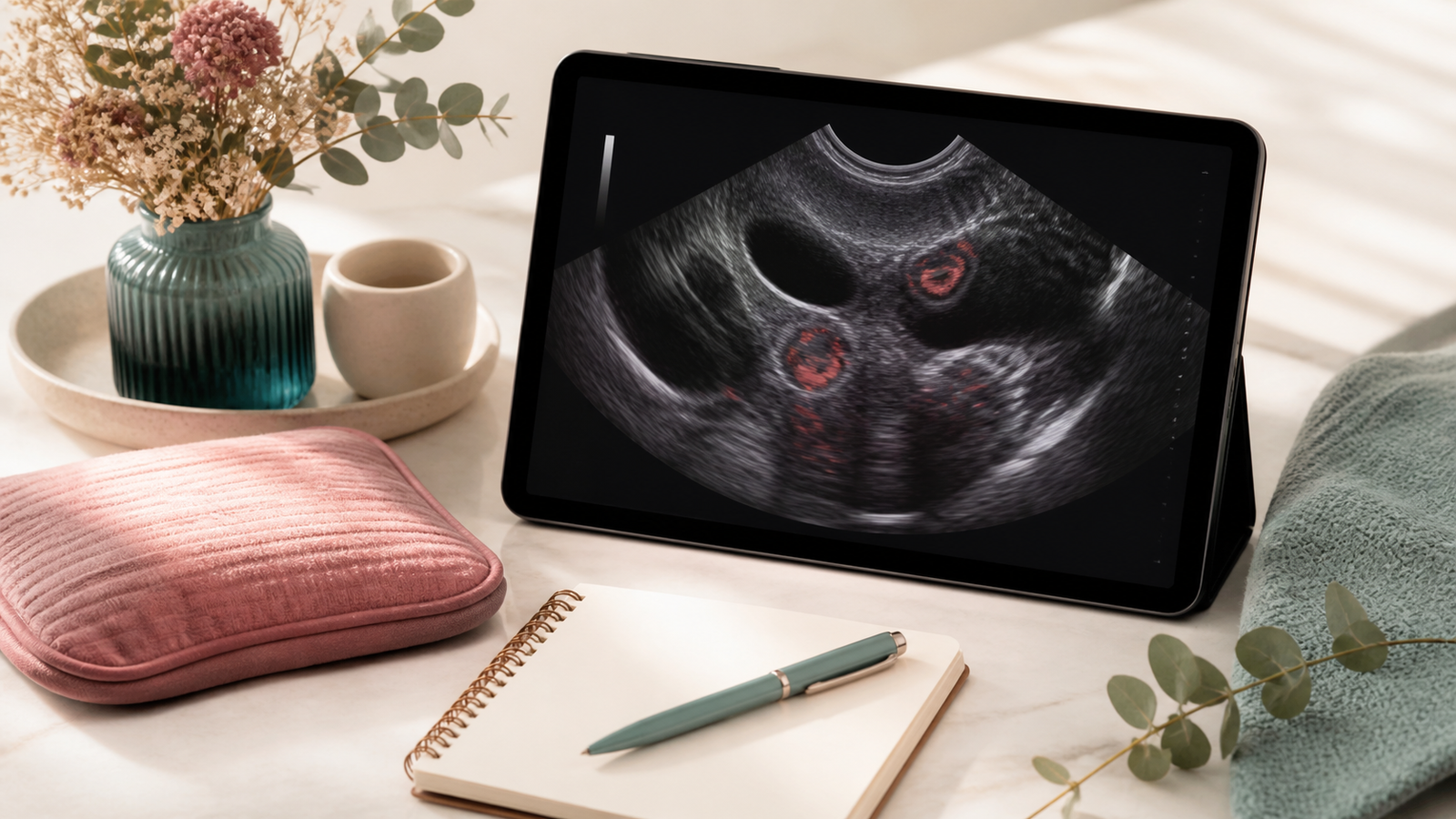
A normal ultrasound can feel reassuring, but it does not always explain severe period pain. Many women are told that the scan is normal, yet they still miss work, vomit during periods, need strong painkillers, or plan their month around bleeding days.
For women searching for endometriosis treatment in Kolkata after repeated pain and normal scan reports, the next step should not be another casual “wait and watch.” An endometriosis specialist in Kolkata may still consider the condition when the symptom pattern is strong, even if routine imaging does not show a cyst or obvious pelvic abnormality.
At Dr Vinita Khemani’s clinic, patients with repeated period pain, normal scans, bowel or bladder symptoms, and fertility concerns often need structured evaluation for suspected endometriosis when scans look normal rather than another routine report review.
Can endometriosis be present with a normal ultrasound?
Yes, endometriosis can be present even when a routine ultrasound report looks normal. Ultrasound can detect some findings, such as ovarian endometrioma or deep disease in experienced hands, but it may miss superficial endometriosis or disease that is not clearly visible on standard imaging.
| What Ultrasound May Show | What It May Still Miss |
|---|---|
| Ovarian cyst or endometrioma | Superficial endometriosis on the pelvic lining |
| Fibroids or obvious uterine changes | Small implants hidden behind organs |
| Enlarged ovary or pelvic mass | Early-stage disease |
| Free fluid or obvious abnormality | Adhesions that are not clearly visible |
| Deep disease when specifically assessed | Disease missed on routine non-targeted scans |
NICE advises that endometriosis should not be excluded only because pelvic examination and ultrasound are normal, and referral may still be needed even with a normal scan: NICE — Endometriosis Diagnosis and Management.
Why a normal scan can still leave unanswered pain
A normal ultrasound often answers a narrow question. It may show that there is no large cyst, no fibroid, no obvious pelvic mass, and no visible abnormality in the uterus or ovaries.
That is useful. It is not always complete.
Endometriosis can be small, flat, hidden, or located in places that are not fully assessed during a routine scan. Some lesions sit on the pelvic lining. Some affect areas behind the uterus, near the bowel, around the bladder, or along supporting ligaments. These areas may not be described clearly unless the scan is targeted for suspected endometriosis.
This is why a report can look normal while the patient’s experience is anything but normal.
A woman may already know the pattern. Pain starts before bleeding. The first two days are unbearable. Painkillers work less than before. Travel is avoided. Sex hurts. Bowel movement becomes painful during periods. The scan says “normal,” but life does not feel normal.
That mismatch deserves attention.
The pain pattern matters more than one report
Endometriosis pain often has a rhythm. It may flare before periods, worsen during bleeding, and settle slowly after the period ends. Some women also feel pain around ovulation, during intercourse, while passing stool, during urination, or after prolonged activity.
The pain may not stay in one neat location. It can be felt in the lower abdomen, pelvis, lower back, rectal area, bladder region, thighs, or deep inside the pelvis.
At Dr Vinita Khemani’s clinic, the symptom story is taken seriously because routine imaging alone may not capture the full condition. We often ask patients to describe how the pain affects daily life, not just how many days bleeding lasts. Missing school, avoiding work, vomiting from cramps, taking repeated painkillers, or fearing every period are not minor details.
Pain that disrupts life should not be dismissed just because one scan is clean.
What routine imaging may miss
Routine ultrasound is usually good for common pelvic findings. It can help check ovarian cysts, fibroids, uterine size, endometrial thickness, obvious pelvic masses, and visible abnormalities.
Endometriosis needs a more specific lens.
Superficial peritoneal disease may not show on ultrasound. Adhesions may not be obvious. Deep disease can be missed if the scan does not assess organ mobility, pouch of Douglas, uterosacral ligaments, bowel-adjacent areas, bladder region, or ovarian movement.
This does not mean every scan is unreliable. It means a normal routine scan should be read in context.
If symptoms strongly suggest endometriosis, the next step may be better clinical evaluation, targeted imaging, treatment discussion, or surgical assessment in selected cases. Repeating the same routine scan without changing the clinical question may not help much.
When targeted ultrasound or MRI may help
A targeted ultrasound may be useful when symptoms point toward endometriosis, especially if there is deep pelvic pain, painful sex, bowel pain during periods, urinary symptoms, infertility, or suspicion of deep disease.
MRI may be considered when deep endometriosis is suspected, ultrasound is unclear, bowel or bladder involvement needs mapping, or surgery is being planned. MRI is not required for every woman with painful periods. It is most useful when the result may change treatment direction.
ESHRE recommends ultrasound or MRI in the diagnostic work-up for endometriosis, but also notes that negative imaging does not exclude the condition, especially superficial peritoneal disease: ESHRE — Endometriosis Guideline.
The practical question is simple: will this imaging change what we do next?
If yes, it may be worth doing. If not, the patient may need a different conversation.
When should you see an endometriosis specialist in Kolkata?
You should consider specialist review when severe period pain continues despite a normal ultrasound, especially if pain affects work, sleep, sex, bowel movement, urination, exercise, or fertility planning.
A consultation is also sensible when painkillers are needed repeatedly, symptoms are worsening, scans do not match the severity of pain, or previous treatment has not helped. Patients searching for an endometriosis doctor in Kolkata usually need more than one report reading. They need a review that connects symptoms, imaging quality, examination findings, treatment response, and future pregnancy plans.
This is where local expertise matters. The goal is not to label every painful period as endometriosis. The goal is to stop ignoring patterns that deserve proper assessment.
Can treatment be started before a confirmed diagnosis?
In some cases, treatment may be discussed based on symptoms and clinical suspicion, especially when urgent surgical concerns are not present. This is sometimes called empirical treatment.
The plan may include pain-control strategies, hormonal medicines when suitable, lifestyle support, and follow-up to see whether symptoms improve. This approach is not right for everyone. It may not be suitable when pregnancy is actively being planned, when red flags are present, when imaging shows a concerning mass, or when symptoms are severe enough to need surgical discussion.
No patient should self-start hormonal medicines or repeated strong painkillers without medical advice. The treatment should match age, fertility goals, migraine history, clotting risk, bleeding pattern, medical conditions, and personal priorities.
When laparoscopy may be discussed
Laparoscopy may be discussed when symptoms are severe, imaging is negative but suspicion remains high, empirical treatment has not helped, fertility evaluation raises concern, an endometrioma is present, or deep disease needs diagnosis and treatment.
Laparoscopy allows the doctor to see inside the pelvis through small cuts using a camera. If endometriosis is found, treatment may sometimes be performed during the same procedure, depending on the surgical plan and consent.
A laparoscopic endometriosis surgeon may be involved when disease appears complex, symptoms are severe, or fertility-preserving surgery needs careful planning. Surgery should not be rushed only because pain exists. It should also not be delayed endlessly when symptoms are disrupting life and other reasonable steps have failed.
The decision should be individual. Pain severity, age, fertility plans, imaging, previous medicines, surgical risks, and patient preference all matter.
Bowel, bladder and fertility symptoms change the evaluation
Endometriosis can affect more than period pain.
Bowel symptoms may include painful bowel movements during periods, constipation, diarrhea, bloating, rectal pain, or cyclical bowel discomfort. Bladder symptoms may include pain while passing urine, urgency, pelvic pressure, or symptoms that worsen around periods.
Fertility symptoms are different. Some women first suspect endometriosis only after pregnancy does not happen despite trying. A normal scan does not always explain fertility delay, especially when severe period pain or painful sex is also present.
These symptoms do not prove endometriosis by themselves. They tell the doctor that the evaluation should go deeper than a routine pelvic scan.
What to carry for the consultation
Bring all ultrasound reports, scan images if available, MRI reports, prescriptions, painkiller history, cycle dates, fertility-treatment records if any, and notes about bowel or bladder symptoms.
Also write down how pain affects daily life. Missed work, vomiting, pain during sex, painful bowel movement during periods, repeated painkiller use, and emergency visits are useful clinical details. They help the doctor understand severity, not just scan findings.
A prepared consultation can save months of repeating the same story.
FAQs
Can endometriosis be missed on ultrasound even if my pain is severe?
Yes, endometriosis can be missed on ultrasound, especially superficial disease or lesions not assessed during a routine scan. Targeted ultrasound or MRI may help in selected cases, but negative imaging still does not fully rule it out. Track your pain pattern and carry previous reports for specialist review.
What symptoms suggest endometriosis when the scan is normal?
Severe period pain, pain before bleeding starts, painful sex, bowel pain during periods, bladder discomfort, pelvic pain between periods, and fertility delay can suggest endometriosis even with a normal scan. The pattern matters more when symptoms recur across cycles and disrupt daily life. Share specific examples such as missed work, vomiting, or pain during bowel movements during consultation.
Should I get an MRI if ultrasound is normal but period pain is severe?
MRI may be useful when deep endometriosis, bowel involvement, bladder involvement, unclear ultrasound findings, or surgical planning is being considered. It is not required for every patient with painful periods, and the decision should depend on symptoms, examination, fertility goals, and previous reports. Ask whether the MRI result will change your treatment plan before booking it.
When is laparoscopy considered for suspected endometriosis?
Laparoscopy may be considered when symptoms are severe, imaging is negative but suspicion remains high, empirical treatment has not helped, fertility is affected, or an endometrioma or deep disease is suspected. It can help diagnose and sometimes treat endometriosis during the same procedure. Discuss benefits, risks, fertility goals, and recovery expectations before deciding.
Medical Conclusion: A normal scan should not end the conversation
A normal ultrasound can be reassuring, but it should not silence severe period pain. If pain is intense, repeated, cycle-linked, or associated with bowel, bladder, sexual, or fertility symptoms, endometriosis can still be present.
The next step is not panic and not blind surgery. The next step is a better evaluation — one that respects symptoms, reviews imaging limits, considers targeted ultrasound or MRI when useful, and discusses treatment options clearly.
If your scan looks normal but your pain does not feel normal, consult Dr Vinita Khemani with your reports and pain history. The goal is to stop guessing and understand what your body has been trying to say.
Medical Disclaimer:
This article is for general patient education only and should not replace personal medical advice, diagnosis, emergency care, imaging interpretation, or treatment planning. Endometriosis evaluation depends on symptoms, examination findings, ultrasound quality, MRI findings, fertility goals, medical history, treatment response, and surgical suitability. Please consult a qualified gynecologist or endometriosis specialist for individualized evaluation and care.
Have questions about this topic?
Book a consultation with Dr. Vinita Khemani to address your specific concerns and get a personalized care plan.