Severe period pain is often blamed on endometriosis. Heavy bleeding is often blamed on hormones, weakness, stress, or “normal painful periods.” But when severe cramps and heavy bleeding happen together, the diagnosis may need a closer look.
Women searching for endometriosis treatment in Kolkata often come with years of painkillers, missed workdays, clots, low energy, and scan reports that do not fully explain what they feel. At Dr Vinita Khemani’s clinic, we often see one important pattern: some women are not dealing with endometriosis alone. Adenomyosis may also be part of the story.
For patients with severe cramps, pelvic pain, painful periods, heavy bleeding, and possible adenomyosis overlap, this page on focused evaluation for painful periods, pelvic pain and suspected endometriosis explains how symptom-led assessment may guide treatment planning.
What is the difference between endometriosis and adenomyosis?
Endometriosis happens when tissue similar to the uterine lining grows outside the uterus, while adenomyosis happens when lining-like tissue grows into the muscular wall of the uterus. Endometriosis is often linked with pelvic pain, painful sex, bowel or bladder pain around periods, and fertility concerns; adenomyosis is more often linked with heavy bleeding, clots, severe cramps, pelvic pressure, and a bulky or tender uterus.
A quick patient-focused comparison:
| Symptom Pattern | What It May Suggest |
|---|---|
| Severe cramps with very heavy bleeding | Adenomyosis may be involved |
| Pain during sex | Endometriosis may be involved |
| Bowel pain or painful stools during periods | Endometriosis may be involved |
| Bulky or enlarged uterus on scan | Adenomyosis may be involved |
| Chronic pelvic pain outside periods | Either condition may contribute |
| Difficulty conceiving | Endometriosis, adenomyosis, or overlap may matter |
| Pain plus heavy bleeding plus clots | Overlap should be considered |
The NHS describes adenomyosis as different from endometriosis and lists heavy periods, painful periods, pelvic pain, and pain during sex among possible symptoms: NHS — Adenomyosis. ACOG also describes endometriosis as a condition commonly linked with chronic pelvic pain, especially before and during periods: ACOG — Endometriosis.
Why painful, heavy periods are often misunderstood
Many women are told that period pain is common. That may be true. But pain that regularly disrupts work, sleep, study, travel, intimacy, or daily movement should not be brushed aside.
The same applies to bleeding.
If a woman is soaking pads quickly, passing clots, waking at night to change protection, feeling dizzy during periods, or planning her month around bleeding days, that is not just a “bad cycle.” It is a symptom pattern.
A woman with endometriosis may mainly describe pelvic pain, painful intercourse, bowel discomfort during periods, or pain that lingers beyond bleeding days. A woman with adenomyosis may say, “The pain is deep, heavy, and dragging,” along with flooding, clots, and low back pressure.
Real patients do not always fit textbook lines. A woman can have both.
When should you see an endometriosis specialist in Kolkata?
A consultation with an endometriosis specialist in Kolkata becomes important when painful periods are worsening, painkillers are no longer enough, bleeding is heavy, clots are frequent, intercourse is painful, bowel or bladder symptoms appear during periods, or pregnancy is not happening despite regular attempts.
The visit should not be limited to asking, “How bad is the pain?”
A proper assessment usually checks:
- when the pain starts and ends
- whether pain continues after the period stops
- how heavy the bleeding is
- whether clots are present
- whether intercourse is painful
- whether bowel movement or urination hurts during periods
- whether ultrasound shows a bulky uterus, endometrioma, fibroid, or adenomyosis
- whether fertility is part of the treatment priority
This is where the diagnosis often becomes clearer. The pattern matters as much as the scan.
Adenomyosis can hide behind an endometriosis label
Some women already have one label before they reach a specialist: “I have endometriosis.”
That may be correct. But if the main complaint is heavy bleeding with deep cramps and a bulky uterus, adenomyosis should also be considered.
Adenomyosis can be missed or under-described on a basic ultrasound. Sometimes the report only says “bulky uterus.” Sometimes it mentions heterogeneous myometrium, asymmetrical wall thickening, myometrial cysts, or poor definition of the junctional zone. These words may look minor to the patient, but they can be meaningful when symptoms match.
This is why old reports matter. A scan from two years ago, a hemoglobin report, and a bleeding diary can show whether the problem is progressing.
The pain pattern gives important clues
Pain mapping is one of the most useful parts of the consultation.
Some women feel cramps only on day one. Some have pain for a week before bleeding. Some feel pelvic heaviness throughout the month. Some have sharp pain during intercourse. Some dread bowel movements during periods.
These are not the same stories.
Endometriosis pain may be cyclical or chronic. It can be linked with painful sex, bowel pain, bladder pain, lower back pain, or fertility concerns. NICHD lists pain and infertility as common symptoms of endometriosis and notes that pain may occur during or after sex, in the intestine, or during urination and bowel movements: NICHD — Endometriosis Symptoms.
Adenomyosis pain often feels more uterine: deep cramps, pressure, heaviness, clots, and heavy flow. When both pain maps overlap, both conditions may need to be evaluated.
Heavy bleeding and clots should change the conversation
A painful period and a heavy period are not automatically the same problem.
Heavy bleeding can mean different things to different women, so doctors often ask for practical details. How many pads are used on the heaviest day? Are there clots? Does bleeding leak through clothes? Does the patient avoid travel? Is hemoglobin low? Has iron been prescribed repeatedly?
A painful heavy periods doctor in Kolkata should not only prescribe stronger painkillers. The evaluation should connect bleeding volume, clot pattern, uterine size, ultrasound findings, hemoglobin level, and fertility goals.
Adenomyosis is not the only cause of heavy bleeding. Fibroids, polyps, hormonal conditions, thyroid disorders, clotting issues, and other uterine problems can also contribute. But when heavy bleeding comes with deep cramps and a bulky uterus, adenomyosis deserves attention.
Enlarged or bulky uterus: one scan phrase patients should not ignore
A bulky uterus is not a diagnosis by itself. It is a clue.
In adenomyosis, the uterus may become enlarged, tender, or uneven because the condition affects the muscular wall. Some women feel bloated or heavy even outside periods. Others describe a constant dragging sensation in the lower abdomen.
The scan report may not always say “adenomyosis” clearly. It may use softer wording. That is why the doctor has to match the report with symptoms and examination findings.
A scan should not be read like a separate document. It should be read with the patient in the room.
Fertility impact: why the distinction matters
Endometriosis is more widely known for its fertility impact, especially when it affects the ovaries, tubes, pelvic anatomy, or causes adhesions. Adenomyosis may also matter in selected fertility cases because it can affect uterine contractility, the implantation environment, or coexist with endometriosis.
This distinction changes counselling.
A 28-year-old trying to conceive, a 35-year-old with heavy bleeding and low hemoglobin, and a 42-year-old who has completed her family may not need the same plan. Treatment decisions should reflect age, fertility goals, pain severity, bleeding severity, ovarian reserve, imaging findings, and previous treatment response.
The right question is not only, “What is the disease?”
It is, “What is this disease doing to this woman’s life?”
Why ultrasound is usually done first, and when MRI may be needed
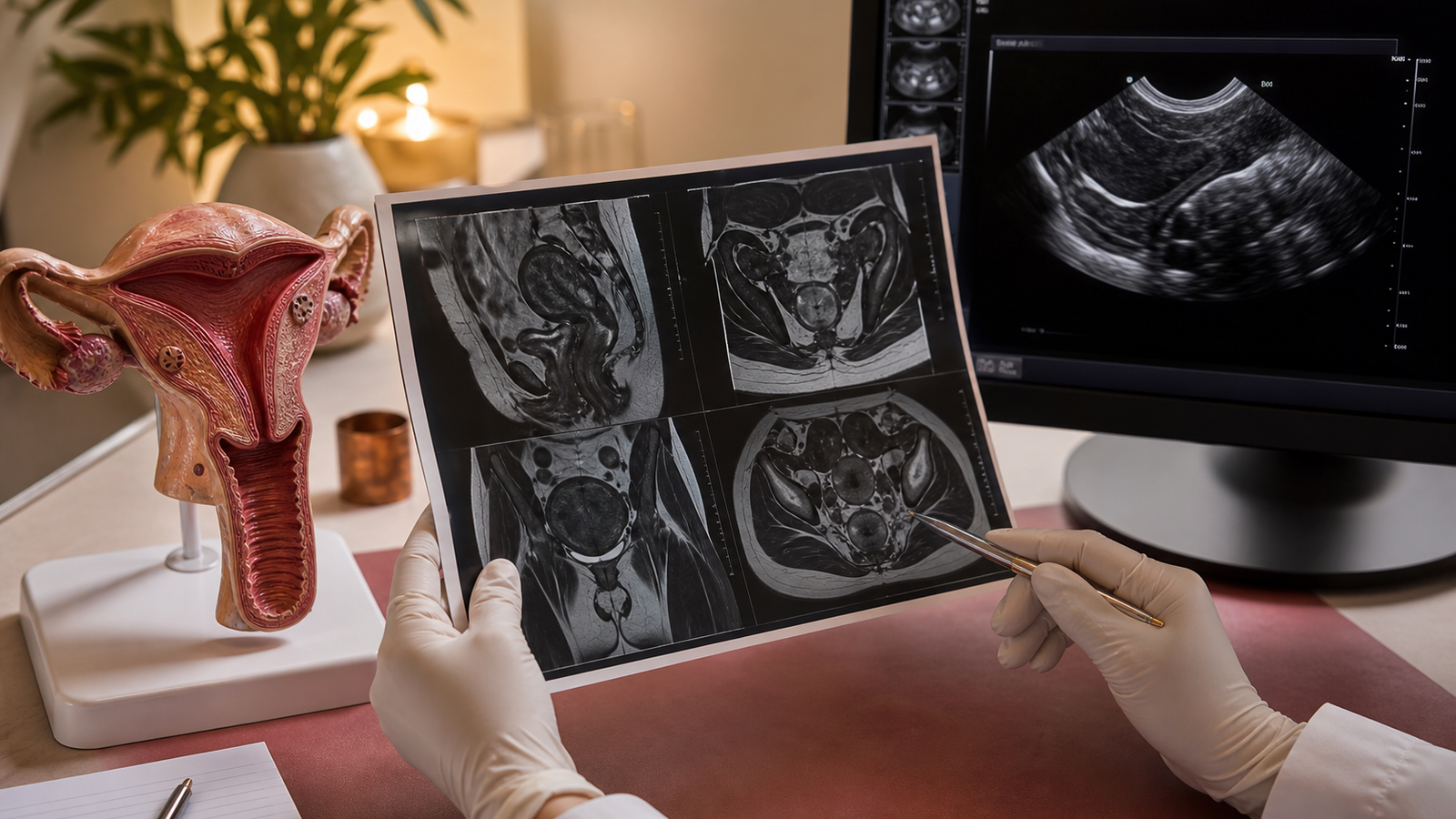
Most evaluations start with a pelvic ultrasound. A good ultrasound can identify ovarian endometriomas, fibroids, uterine size, endometrial thickness, and features that may suggest adenomyosis.
But ultrasound does not answer every question. The result can depend on image quality, scan timing, reporting detail, and operator experience. Subtle adenomyosis or deep endometriosis may not always be clearly visible.
MRI may be advised when symptoms are severe but the ultrasound report does not fully explain the pain or heavy bleeding. It may also help when adenomyosis is suspected but not well defined, or when treatment planning needs a clearer view of the uterus and pelvic area.
MRI is not required for every patient. It is useful when the result can change the next step.
Patients should carry all previous scan reports, not just the latest one. Changes over time can help the doctor understand whether the condition is stable, progressing, or being missed on routine imaging.
What adenomyosis treatment may involve when periods are painful and heavy
Women searching for adenomyosis treatment in Kolkata are usually trying to understand one thing: “Can this be controlled without years of trial and error?”
Treatment may include anti-inflammatory pain relief, hormonal medicines, menstrual suppression options, anemia correction, lifestyle support for pain coping, follow-up imaging, or surgery in selected cases. The plan depends on age, bleeding severity, pain pattern, fertility goals, medical history, scan findings, and whether endometriosis is also suspected.
For women planning pregnancy, treatment has to be more careful. For women with severe bleeding and anemia, blood correction may become urgent. For women whose symptoms are not improving despite medicines, a deeper review is needed.
No one treatment suits everyone.
When surgery is discussed
Surgery is not the first answer for every woman with severe period pain.
It may be discussed when symptoms are severe, medicines are not working, imaging shows endometrioma or deep disease, fertility evaluation suggests structural disease, or quality of life is badly affected. For endometriosis, surgery may help diagnose and treat visible disease in selected cases. For adenomyosis, the surgical discussion is more complex because the disease lies within the uterine muscle.
A woman who wants future pregnancy may need a different approach from someone who has completed her family. In severe cases where the family is complete, more definitive options may be discussed after careful counselling.
No patient should be pushed into surgery from one scan line. The reason should be clear: pain control, bleeding control, fertility planning, diagnosis, or failure of medical treatment.
What to track before your consultation
A good consultation starts before the appointment.
Write down:
- when the pain starts before the period
- how many days the pain lasts
- number of pads used on the heaviest day
- clot size and frequency
- whether bleeding leaks through clothes
- pain during sex
- bowel or bladder pain during periods
- lower back pain or pelvic heaviness
- medicines already tried
- hemoglobin or iron reports
- ultrasound or MRI findings
- fertility timeline, if pregnancy is planned
This information helps the doctor avoid vague treatment and focus on the actual pattern.
Doctor’s Insight: the diagnosis is often in the combination
At Dr Vinita Khemani’s clinic, we rarely look at painful periods as one isolated complaint. Severe cramps with heavy bleeding, pain during sex with bowel discomfort, clots with a bulky uterus, or pelvic pain with delayed conception all tell different stories.
The most useful diagnosis often comes from connecting the dots.
A scan matters. So does the pain diary. So does the bleeding history. So does fertility planning. When these details are reviewed together, the treatment plan becomes more specific and less dependent on guesswork.
FAQs
How do I know if my painful, heavy periods are from endometriosis or adenomyosis?
Painful, heavy periods may be caused by adenomyosis, endometriosis, fibroids, or overlapping pelvic disease. Adenomyosis often causes heavy bleeding, clots, deep cramps, and a bulky uterus, while endometriosis is more often linked with pelvic pain, painful sex, bowel or bladder pain during periods, and fertility concerns. A gynecologic review with symptom mapping, pelvic examination, ultrasound, and sometimes MRI helps narrow the diagnosis.
What things trigger endometriosis?
Endometriosis symptoms are often triggered or worsened around periods because endometriosis-like tissue can respond to hormonal changes and cause inflammation, irritation, and pain. Some women notice flares during menstruation, intercourse, bowel movements, urination, or around ovulation, but the exact trigger pattern is different for every patient. A pain diary can help the doctor see whether symptoms are cyclical, bowel-related, bladder-related, intercourse-related, or constant.
What happens if you have both endometriosis and adenomyosis?
If a woman has both endometriosis and adenomyosis, symptoms may feel more intense because pain can come from outside the uterus as well as from the uterine muscle itself. This overlap may cause severe cramps, heavy bleeding, pelvic pressure, painful sex, bowel or bladder pain during periods, and fertility-related concerns. A gynecologist may need to review symptoms, ultrasound findings, MRI if needed, bleeding pattern, and fertility plans before choosing treatment.
When should you have surgery for endometriosis?
Surgery for endometriosis may be discussed when pain is severe, medicines are not helping, fertility evaluation suggests endometriosis-related problems, imaging shows an endometrioma, or the diagnosis needs confirmation. ACOG explains that surgical treatment aims to remove as much visible endometriosis as possible, but treatment choice depends on symptoms, age, fertility goals, disease extent, and previous response to medicines. Surgery should not be decided from pain alone; the doctor should explain whether the goal is diagnosis, pain relief, fertility planning, or treatment of visible disease.
What age is most common for adenomyosis?
Adenomyosis is more commonly diagnosed in women over the age of 30, though it can be found in younger women too. It is often suspected in women with heavy painful periods, pelvic pain, pain during sex, or an enlarged uterus on examination or imaging. Age alone does not confirm adenomyosis; symptoms and imaging findings need to match the clinical picture.
What will a gynecologist do for adenomyosis?
A gynecologist will usually start by reviewing the bleeding pattern, pain history, pelvic examination findings, ultrasound report, hemoglobin level, and fertility goals. If adenomyosis is suspected but not clear on ultrasound, MRI may be advised to understand the uterine muscle and disease extent better. Treatment may include pain-control medicines, hormonal options, bleeding control, anemia correction, follow-up imaging, or surgery in selected cases depending on age, symptoms, and pregnancy plans.
What is more painful, endometriosis or adenomyosis?
Endometriosis and adenomyosis can both be very painful, but the pain often feels different. Endometriosis may cause pelvic pain, painful sex, bowel or bladder pain around periods, and fertility concerns, while adenomyosis often causes deep uterine cramps, heavy bleeding, clots, pelvic heaviness, and a bulky uterus. One condition is not always “more painful” than the other; severity depends on disease location, overlap, inflammation, bleeding, nerve sensitivity, and individual pain response.
Can painful heavy periods affect fertility?
Painful heavy periods can be associated with conditions that may affect fertility, especially endometriosis, adenomyosis, fibroids, or chronic pelvic inflammation. The risk depends on age, ovarian reserve, pelvic anatomy, uterine environment, bleeding severity, and whether ovulation or sperm factors are also involved. Women trying to conceive should not ignore worsening pain, heavy bleeding, or repeated failed attempts.
A Clearer Next Step for Painful, Heavy Periods
Heavy periods with severe pain should not be dismissed as normal, especially when bleeding affects work, sleep, travel, intimacy, hemoglobin levels, or fertility plans. Endometriosis and adenomyosis can look similar from the outside, but they affect the body differently and may need different treatment decisions.
The practical next step is simple: track pain, document bleeding volume, carry old scan reports, check hemoglobin if bleeding is heavy, and seek gynecologic evaluation if symptoms are worsening. A clearer diagnosis can prevent years of temporary treatment and repeated confusion.
Medical Disclaimer:
This article is for general patient education only and should not replace personal medical advice, diagnosis, fertility guidance, emergency care, or treatment. Painful and heavy periods can have several causes, including endometriosis, adenomyosis, fibroids, hormonal conditions, infection, and other gynecologic disorders. Evaluation and treatment depend on age, symptoms, fertility goals, examination findings, ultrasound or MRI results, blood reports, medical history, and prior treatment response. Please consult a qualified gynecologist or endometriosis specialist for individualized care.
Have questions about this topic?
Book a consultation with Dr. Vinita Khemani to address your specific concerns and get a personalized care plan.