

Author / Medical Review Note:
This article should be authored or medically reviewed by Dr Vinita Khemani before publication.
Last Updated: September 2026
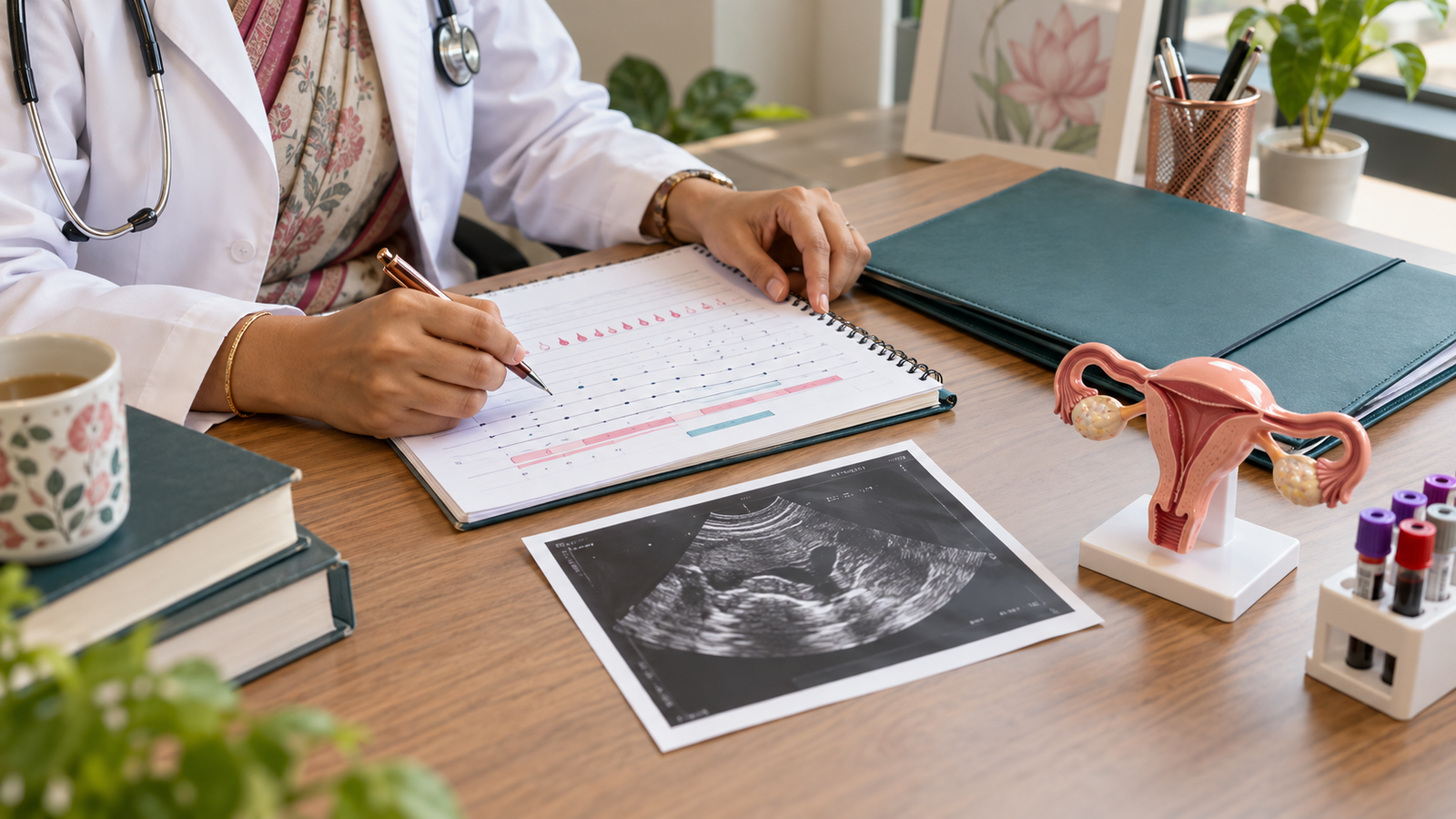
Many women do not visit a gynecologist with one neat problem. One patient may have late periods and lower abdominal pain. Another may have white discharge, itching and pelvic discomfort. Someone else may be worried about pregnancy, fertility, heavy bleeding or a scan report that looks confusing.
When you consult a female gynecologist in Kolkata, the first step should not be a long list of tests. The first step is to understand the symptom pattern, age, life stage, pregnancy possibility, medical history and urgency.
Many women say, “I don’t even know what to book the appointment for — periods, infection, pregnancy doubt, or pain.” That confusion is common, and it is exactly why the first consultation matters.
Women looking for Dr Vinita Khemani’s gynecology care can expect evaluation that connects menstrual concerns, pelvic pain, pregnancy doubts, fertility questions, discharge symptoms and previous reports with the right first step instead of treating every problem with the same test.
How does a female gynecologist in Kolkata decide what tests are needed?
A gynecologist decides tests based on symptoms, age, menstrual history, pregnancy possibility, examination findings, previous reports and clinical urgency. Ultrasound, blood tests, pregnancy testing, infection testing or specialist referral should be chosen only when they answer a real medical need. Good gynecology care starts with the patient’s story, not with random investigations.
| Symptom or Concern | First Evaluation Pathway |
|---|---|
| Missed period | Pregnancy possibility, cycle history, stress, weight changes and medicine history |
| Heavy bleeding | Bleeding pattern, anemia symptoms, examination, blood count and ultrasound when indicated |
| Severe period pain | Pain timing, pelvic symptoms, scan review and endometriosis or adenomyosis consideration |
| White discharge or itching | Infection history, examination and swab or treatment when clinically needed |
| Lower abdominal pain | Pregnancy possibility, urinary or bowel symptoms, pelvic examination and ultrasound when needed |
| Fertility delay | Cycle pattern, ovulation clues, semen report and uterus/tube review where appropriate |
| Irregular periods | PCOS, thyroid, prolactin, weight pattern and hormonal review when indicated |
| Pelvic pressure or lump feeling | Examination, ultrasound and fibroid, cyst or prolapse evaluation |
| Bleeding after menopause | Prompt gynecologic review and endometrial assessment where advised |
| Abnormal scan report | Report interpretation, symptom matching, follow-up or referral planning |
ACOG notes that pelvic exams are generally recommended when a woman has symptoms or a medical history that requires one. Symptoms such as abnormal bleeding, abnormal discharge, pelvic pain or pain during sex may point to a gynecologic problem: ACOG — Pelvic Exams.
Why mixed symptoms need step-by-step thinking
Women’s health symptoms often overlap. A late period may be linked to pregnancy, PCOS, thyroid imbalance, stress, sudden weight change, perimenopause or medication effects. Lower abdominal pain may come from the uterus, ovaries, urinary tract, bowel, pregnancy-related causes or infection.
That is why a good consultation does not rush to one label.
A gynecologist listens for timing, severity, recurrence and risk signs. Symptoms linked to periods are approached differently from symptoms linked to pregnancy possibility, infection, fever, severe pain or postmenopausal bleeding.
The story often tells the doctor which test should come first.
What history tells the doctor before any test
History is not small talk. It is the map that prevents unnecessary testing.
Your doctor may review menstrual dates, bleeding pattern, pain location, discharge symptoms, pregnancy possibility, contraception use, previous pregnancies, miscarriages, surgeries, current medicines and old reports.
Some patients feel shy while sharing these details. That is understandable. But these facts help the doctor separate routine concerns from symptoms that need quicker attention.
A delayed period in a teenager, a missed period in a woman trying to conceive and bleeding after menopause are not handled in the same way. Age and life stage matter.
When pregnancy possibility is checked first
Pregnancy possibility often needs to be clarified early when periods are delayed, bleeding is unusual or pelvic pain occurs in a woman who could be pregnant.
This is not only about confirming pregnancy. It is about safety.
A positive pregnancy test changes medicine choices, scan timing and how pelvic pain or bleeding should be handled. A simple urine pregnancy test can prevent wrong assumptions and guide the consultation in the right direction.
This is why doctors may check pregnancy status before discussing hormones, infection, pain medicine or imaging.
When ultrasound helps — and when it may not be the first step
Ultrasound is useful, but it should not be treated as the answer to every gynecologic concern.
It can help evaluate ovarian cysts, fibroids, uterine size, pregnancy location, endometrial thickness, pelvic masses and some structural causes of pain or bleeding. But ultrasound may not solve a problem caused by infection, urine symptoms, hormonal fluctuation or medicine-related bleeding.
A scan is most useful when the symptoms point toward a structural concern.
For example, heavy bleeding with pelvic pressure may need imaging earlier. Severe one-sided pelvic pain may need urgent assessment. Recurrent irregular periods may need hormone and metabolic review along with clinical evaluation.
The test should match the problem.
When blood tests are useful
Blood tests should answer a specific clinical question.
A full blood count may be advised when heavy bleeding has caused tiredness, dizziness or suspected anemia. Thyroid or prolactin tests may be useful in selected irregular-period cases. Hormonal tests may be considered in fertility or PCOS-related evaluation. Infection tests may be needed when symptoms suggest a specific cause.
In fertility care, the timing of certain tests may matter. In perimenopause, symptoms and bleeding pattern may matter more than one isolated hormone value.
A gynecologist in Kolkata should explain why a test is being advised and how the result may change the next step.
When examination becomes important
Many women feel nervous about gynecologic examination. That is normal.
Examination is advised when it adds useful information. It may help assess tenderness, discharge, infection signs, cervical concerns, bleeding source, pelvic mass, prolapse or pain location.
Sometimes an abdominal examination is enough. Sometimes a pelvic examination is needed. Sometimes examination may be modified or deferred depending on age, symptoms, pregnancy possibility, comfort and urgency.
A respectful consultation should explain the reason before the examination begins.
How heavy bleeding is evaluated carefully
Heavy bleeding can affect daily life more than many people realize. Women may plan work, travel and family responsibilities around their periods. Some become weak, pale, dizzy or breathless because of blood loss.
NICE guidance on heavy menstrual bleeding recommends considering the woman’s history and examination when deciding whether hysteroscopy or ultrasound should be the first-line investigation: NICE — Heavy Menstrual Bleeding: Assessment and Management.
That fits real practice. Heavy bleeding in a teenager, a 35-year-old with pelvic pressure and a woman near menopause with new irregular bleeding may need different evaluation pathways.
The goal is not just to reduce bleeding. The goal is to understand why it is happening and what treatment path is safest.
When fertility concern changes the evaluation
Fertility concern should not be reduced to one test for the woman.
If pregnancy has not happened after a reasonable period of trying, evaluation may include ovulation pattern, cycle regularity, semen report, uterus assessment, tube-related factors, age, pain history and previous infection or surgery history.
A woman with regular periods may still need fertility evaluation. A woman with irregular cycles may need ovulation and hormonal review. A woman with painful periods may need assessment for pelvic causes.
A balanced approach prevents both delay and panic. It also avoids placing the entire burden on the woman before basic couple factors are reviewed.
When hormonal symptoms need a broader view
Irregular periods, acne, unwanted hair growth, weight changes, hair fall, mood changes or long cycle gaps can make women worry about hormones.
A hormone concern is not diagnosed from one symptom alone. Doctors usually look at cycle pattern, weight trend, acne severity, hair-growth pattern, thyroid symptoms, sleep, stress, medicines and pregnancy goals.
Sometimes tests are needed. Sometimes ultrasound helps. Sometimes the clinical picture gives stronger direction than one isolated report.
Good gynecology treatment in Kolkata starts with matching the symptom to the right first step, not ordering every test on the same day.
When surgical evaluation is discussed
Surgical evaluation does not mean surgery has already been decided.
It means the condition may need a surgical perspective because of size, symptoms, scan findings, recurrence, fertility goals, risk profile or poor response to medical treatment.
This may happen with a large ovarian cyst, fibroid causing pressure or heavy bleeding, suspected polyp, persistent pelvic pain, endometriosis suspicion or a scan finding that needs direct evaluation.
A careful doctor explains what can be watched, what may be treated medically and what may need surgery if symptoms or reports justify it.
Many patients searching for the best lady gynecologist in Kolkata are not only looking for a name; they are looking for someone who listens carefully, explains why a test is needed and avoids unnecessary panic.
When referral to another specialist may be needed
Sometimes safe gynecology care means knowing when another specialist should be involved.
Pelvic pain may overlap with urinary, bowel or muscle-related causes. Certain pregnancy findings may need fetal-medicine input. Suspicious ovarian findings may need oncology review. Complex infertility situations may need advanced reproductive support.
Referral is not failure. It is part of responsible care.
A good first consultation should clarify whether the issue can be handled with gynecology care, monitored safely, reviewed surgically or referred for a more specialized pathway.
What to carry for a first gynecology visit
A clear file makes the consultation smoother.
Carry previous ultrasound reports, blood tests, prescriptions, discharge summaries, surgery notes, pregnancy test result if relevant and menstrual dates for the last few months. If symptoms are recurring, write down when they started, how often they happen and what makes them worse.
Also bring details of current medicines, allergies, previous pregnancies, miscarriages or fertility reports if available.
Do not worry if everything is not ready. Start with what you have. A good consultation can organize the next step.
FAQs
How does a gynecologist decide whether I need ultrasound or blood tests?
A gynecologist decides ultrasound or blood tests based on symptoms, age, menstrual history, pregnancy possibility, examination findings and previous reports. Ultrasound is more useful when a structural issue such as fibroid, cyst, pregnancy location or pelvic mass is suspected, while blood tests may help in heavy bleeding, hormonal concerns, infection or fertility review. Bring your old reports and describe when the symptom started, because that often decides the first test.
Should I see a gynecologist if my symptoms are mixed and not clearly one problem?
Yes, mixed symptoms are a valid reason to see a gynecologist. Late periods with pain, discharge with pelvic discomfort or heavy bleeding with weakness may need step-by-step evaluation instead of self-treatment. Write down your symptoms by date so the doctor can separate urgent issues from routine follow-up.
Do all gynecology problems need internal examination?
No, all gynecology problems do not need an internal examination. The need for examination depends on symptoms, age, sexual history, pregnancy possibility, pain, bleeding, discharge and clinical urgency. Ask the doctor to explain why an examination is needed and what information it will add.
When should I not wait for a routine gynecology appointment?
You should not wait if you have severe pelvic pain, heavy bleeding with dizziness, fainting, fever, pregnancy with pain or bleeding, postmenopausal bleeding or sudden worsening symptoms. These signs may need urgent assessment because delay can make diagnosis and treatment harder. Seek prompt medical care and carry any scan, test or prescription you already have.
Your next step when symptoms feel confusing
Women’s health problems are not always neat. One symptom may point to several possibilities, and several symptoms may come from one underlying issue.
The safest path is not random testing or self-treatment. The safer path is structured evaluation: history first, pregnancy possibility when relevant, examination when needed, ultrasound or blood tests only when they answer a real question, and referral or surgical review when appropriate.
If your symptoms feel confusing or your reports do not make sense, consult Dr Vinita Khemani with your history and previous records. A focused gynecology review can help decide which test, treatment or specialist step should come first.
Medical Disclaimer:
This article is for general patient education only and should not replace personal medical advice, diagnosis, emergency care, pregnancy care, fertility treatment, prescription medicines, imaging interpretation or surgical planning. Gynecologic evaluation, pelvic examination, ultrasound, blood tests, pregnancy testing, referral and treatment decisions depend on age, symptoms, medical history, pregnancy possibility, examination findings, reports and individual risk factors. Please consult a qualified gynecologist for personalized care.
Have questions about this topic?
Book a consultation with Dr. Vinita Khemani to address your specific concerns and get a personalized care plan.