

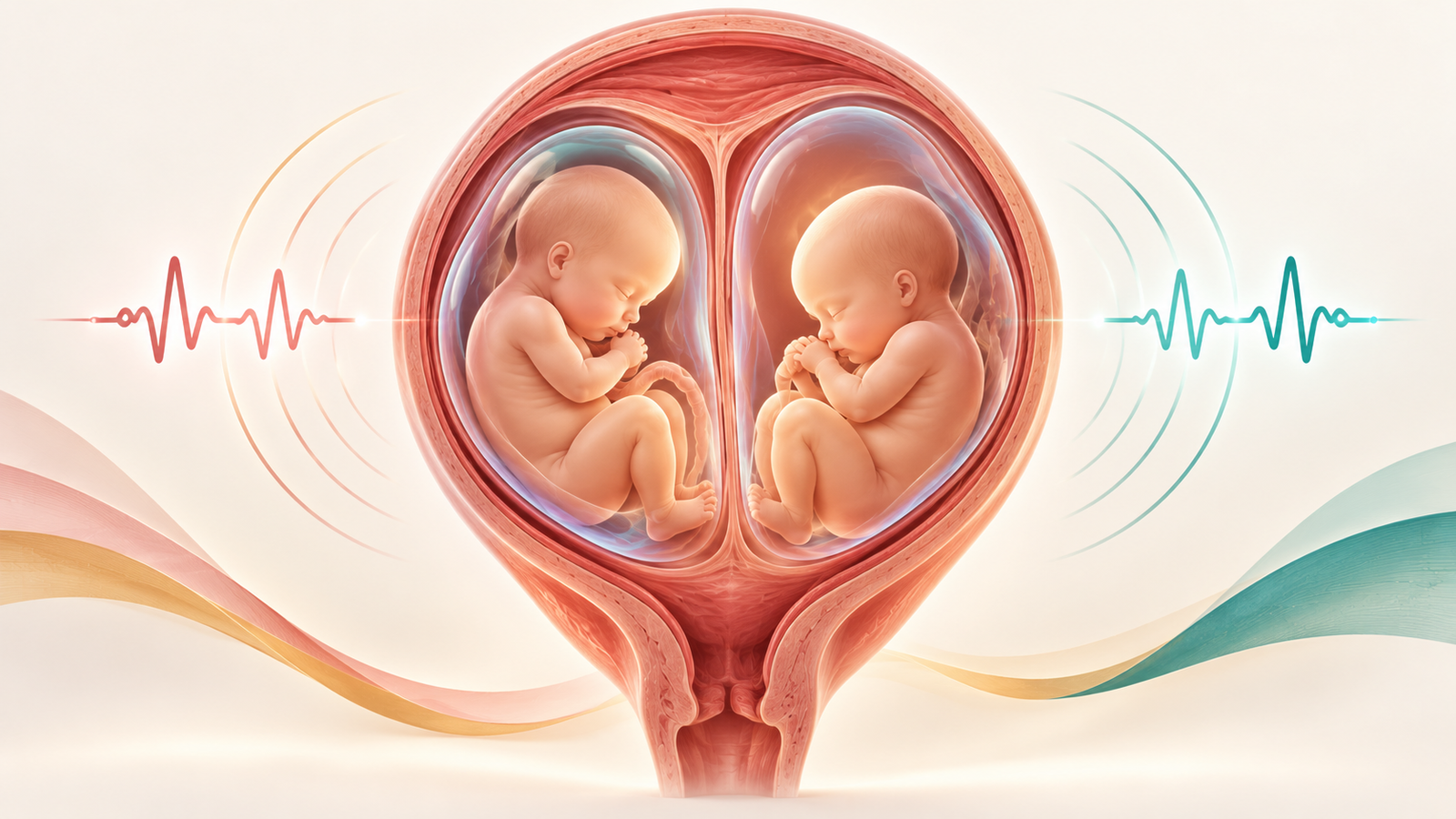
Seeing two babies on an ultrasound can feel exciting, surprising and emotional. For many parents, the first reaction is joy. Then the practical questions begin.
Many parents leave the first twin scan wondering, “Does this mean more hospital visits, more scans, or a different delivery plan?”
For families looking for high-risk pregnancy care in Kolkata, the important point is simple: a twin pregnancy does not mean complications are certain. It usually means the pregnancy needs more structured monitoring because two babies, placental type, maternal health and delivery timing all need careful review.
At Dr Vinita Khemani’s clinic, twin pregnancy follow-up is approached through the scan report, placental type, both babies’ growth, maternal blood pressure, sugar screening, symptoms and delivery planning.
Women expecting twins may benefit from understanding how high-risk pregnancy management connects placental type, ultrasound findings, maternal blood pressure, sugar screening and fetal growth monitoring into one structured pregnancy monitoring plan.
Is a twin pregnancy considered high-risk?
Yes, a twin pregnancy is usually managed as higher-risk than a singleton pregnancy because two babies may need closer growth, placental, maternal-health and delivery monitoring. This does not mean something will definitely go wrong. It means the doctor watches more carefully for growth difference, blood pressure problems, gestational diabetes, preterm birth symptoms and delivery-planning needs.
| Monitoring Area | Singleton Pregnancy | Twin Pregnancy |
|---|---|---|
| Placental assessment | Usually focused on one baby and one placental setup | Placental type matters because twins may have separate or shared placentas |
| Growth monitoring | Growth is checked as advised | Growth of both babies and growth difference may need closer review |
| Blood pressure | Checked during antenatal visits | BP may need closer attention because twin pregnancy can increase maternal demand |
| Sugar screening | Done as per pregnancy plan | Gestational diabetes screening and follow-up may become more important |
| Preterm birth risk | Present in some pregnancies | More common in twin pregnancies, so symptoms need early review |
| Fetal movement | Based on one baby’s usual pattern | Movement can feel harder to interpret because two babies may overlap |
| Delivery planning | Based on maternal and baby factors | Depends on gestational age, growth, placental type, baby positions and maternal condition |
| Visit frequency | Usually routine unless risk appears | Often more structured and scan-led |
| Emergency review | Based on warning symptoms | Bleeding, contractions, fluid leakage or reduced movement should be reviewed quickly |
ACOG explains that multiple pregnancy can increase the chance of complications such as preterm birth, gestational diabetes and preeclampsia. NICE recommends early ultrasound to determine chorionicity and amnionicity because twin-pregnancy monitoring depends on placental and membrane type.
Why the first twin scan matters so much
In a twin pregnancy, the early scan does more than confirm two heartbeats. It helps the doctor understand how the pregnancy is arranged.
One key detail is whether the babies have separate placentas or share one placenta. This is called chorionicity. Another detail is whether the babies have separate amniotic sacs. This is called amnionicity.
These words sound technical, but they matter in real care.
Twins with separate placentas are monitored differently from twins sharing one placenta. Shared-placenta pregnancies may need closer observation because some concerns are linked to how blood flow is shared between the babies.
Parents do not need to decode the report alone. The safer step is to ask the doctor what the scan shows and how it changes follow-up.
Why twin growth monitoring may look different
In a twin pregnancy, doctors are not only checking whether the babies are growing. They are also checking whether both babies are growing in a balanced way.
Sometimes both babies grow well. Sometimes one baby grows slower than the other. Sometimes the difference is mild and only needs watchful follow-up. Sometimes it needs closer review, Doppler assessment or referral depending on the scan findings.
This is why repeated growth scans may be advised.
A mother may feel completely fine, but the scan may show that one baby needs closer observation. The reverse can also happen: the scan may be reassuring even when the mother feels anxious because movements feel confusing or belly size feels different from what she expected.
Twin care is not based on guesswork from belly size. It is guided by scans, symptoms and clinical assessment.
How high-risk pregnancy care in Kolkata plans twin monitoring
High-risk pregnancy care in Kolkata for twins usually looks at two sides of the pregnancy: the babies’ growth and the mother’s health.
For the babies, monitoring may include placental type, growth pattern, fluid around each baby, Doppler studies when advised, fetal position and signs that one baby needs closer observation.
For the mother, monitoring may include blood pressure, swelling, urine protein, blood sugar, anemia, thyroid status, weight gain, symptoms of preterm labor and overall physical tolerance.
This does not mean every appointment will feel complicated. It means each visit has a purpose.
Patients searching for a high-risk pregnancy specialist in Kolkata should look for qualified obstetric care that reviews chorionicity, growth pattern, blood pressure, sugar results, fetal movement concerns and delivery timing before planning follow-up.
Maternal blood pressure needs close attention
High blood pressure can appear in any pregnancy, but a twin pregnancy may place more demand on the mother’s body.
Doctors usually watch for rising BP, swelling, headache, visual symptoms, abdominal pain, urine protein and fetal growth concerns. Some symptoms are easy to dismiss as “normal pregnancy discomfort,” but they should be discussed rather than ignored.
A headache that does not settle, sudden swelling or visual disturbance should not be managed casually at home.
Early reporting helps the doctor decide whether rest, tests, medicine, closer follow-up or hospital review is needed.
Gestational diabetes screening may become important
Twin pregnancy can increase metabolic demand. That is one reason sugar screening matters.
Gestational diabetes may not always cause obvious symptoms. A woman may feel completely fine and still have abnormal sugar results. If sugar is high, treatment may include food planning, glucose monitoring, exercise guidance where safe, medicine when advised and growth monitoring.
The goal is not to frighten the mother.
The goal is to reduce preventable risk and help the pregnancy stay as stable as possible. A clear plan can help the mother understand what to eat, what to track and when to call.
Preterm delivery risk: what parents should know
Twin pregnancies are more likely to deliver earlier than singleton pregnancies. This does not mean every twin pregnancy will deliver very early. It means warning symptoms need quicker attention.
Call the doctor or seek medical review if there is regular tightening, pelvic pressure, low backache that does not settle, watery leakage, bleeding, fever, reduced fetal movement or sudden worsening pain.
Some symptoms may turn out to be harmless. Still, it is better to check early than to wait too long.
Emergency high-risk pregnancy care becomes important when symptoms suggest preterm labor, bleeding, rupture of membranes, severe BP symptoms or reduced fetal movement.
Fetal movement can feel different with twins
Many mothers carrying twins wonder whether they should feel two separate movement patterns.
Sometimes they can. Sometimes movements overlap. Sometimes one baby’s position makes movement easier to feel than the other. This can make self-monitoring confusing.
The key is to learn what feels usual for your pregnancy and report a clear reduction or sudden change.
Do not try to guess which baby moved less. If movements feel reduced or different from the usual pattern, call the doctor and follow the advised review plan.
Delivery planning is more individualized
Delivery planning for twins depends on many factors: gestational age, baby positions, growth, placenta type, maternal BP, diabetes, previous C-section, fetal wellbeing and whether any complication has appeared.
Some twin pregnancies may be considered for vaginal birth when conditions are suitable. Some may need planned C-section. Some may need earlier delivery because continuing the pregnancy becomes less safe than delivery.
This decision should not be copied from another twin pregnancy.
Two women may both be carrying twins, but their delivery plans may be different because their babies’ positions, placental type, previous delivery history and maternal health are different.
High-risk pregnancy management in Kolkata should not mean panic
High-risk pregnancy management in Kolkata for twin pregnancy should focus on structured follow-up, not panic.
A twin pregnancy needs attention, but attention is not the same as alarm. The doctor’s role is to explain what is being watched, why a scan is needed, which symptoms matter and when delivery planning should begin.
A good plan helps the family feel more prepared.
At Dr Vinita Khemani’s clinic, the focus is practical clarity: understanding the scan report, tracking maternal health, watching both babies’ growth and making timely decisions without assuming complications are inevitable.
What high risk pregnancy treatment in Kolkata means for twins
High risk pregnancy treatment in Kolkata should be understood as risk-based monitoring, maternal-condition management and timely delivery planning, not one fixed treatment for every twin pregnancy.
For one mother, the main focus may be growth scans. For another, it may be blood pressure control. For another, it may be sugar monitoring, cervical symptoms, preterm-labor warning signs or delivery timing.
This is why individualized care matters.
The safest plan is built from the pregnancy’s actual findings, not from the word “twins” alone.
What to carry for your twin-pregnancy visit
Bring all ultrasound reports, especially the earliest scan that mentioned twins. That early report may contain important details about placental type and sacs.
Also carry blood pressure records if available, blood sugar reports, thyroid reports, previous pregnancy records, current medicines and any emergency visit notes.
If the scan mentions chorionicity or amnionicity, keep that report safely.
Write down symptoms such as tightening, pelvic pressure, bleeding, fluid leakage, swelling, headache, reduced movement or unusual pain. Small details can help the doctor decide whether monitoring needs to change.
FAQs
Is a twin pregnancy always high-risk?
Yes, twin pregnancy is generally managed as higher-risk than singleton pregnancy because two babies and placental factors need closer monitoring. The actual risk depends on placental type, growth pattern, maternal BP, diabetes status, gestational age and symptoms. Ask your doctor whether your twins have separate placentas or share one, because that can change follow-up.
How often are scans needed in a twin pregnancy?
Twin pregnancy often needs more structured ultrasound follow-up than a singleton pregnancy. Scan frequency depends on chorionicity, growth, fluid levels, Doppler findings, maternal condition and gestational age. Keep every scan report because comparison over time helps the doctor understand whether both babies are growing well.
What warning signs should I report quickly when carrying twins?
Report regular contractions, pelvic pressure, watery leakage, bleeding, severe headache, visual symptoms, sudden swelling, severe abdominal pain or reduced fetal movement quickly. These symptoms do not always mean danger, but twin pregnancy may need faster review when they appear. Keep emergency instructions and hospital contact details ready.
Does expecting twins always mean C-section?
No, expecting twins does not always mean C-section. Delivery mode depends on the babies’ positions, gestational age, growth, fetal wellbeing, placenta-related factors, previous C-section history and maternal health. Discuss delivery planning early so you understand what may make vaginal birth or C-section safer in your case.
Your next step after finding out you are expecting twins
A twin pregnancy brings double joy, but it also needs a more organized monitoring plan.
The safest next step is to understand the placental type, follow growth scans, track maternal BP and sugar, report warning symptoms early and discuss delivery planning at the right time.
If you are expecting twins, carry your earliest twin scan and current pregnancy reports for a qualified obstetric review. Dr Vinita Khemani can review the findings in context and explain what monitoring may be appropriate for your pregnancy.
Medical Disclaimer:
This article is for general patient education only and should not replace personal medical advice, emergency care, pregnancy diagnosis, scan interpretation, fetal monitoring, medication decisions, delivery planning or hospital-based assessment. Twin pregnancy monitoring depends on placental type, amnionicity, gestational age, fetal growth, maternal blood pressure, diabetes status, symptoms, previous pregnancy history and individual obstetric assessment. Please consult a qualified obstetrician or high-risk pregnancy specialist for personalized care.
Have questions about this topic?
Book a consultation with Dr. Vinita Khemani to address your specific concerns and get a personalized care plan.