

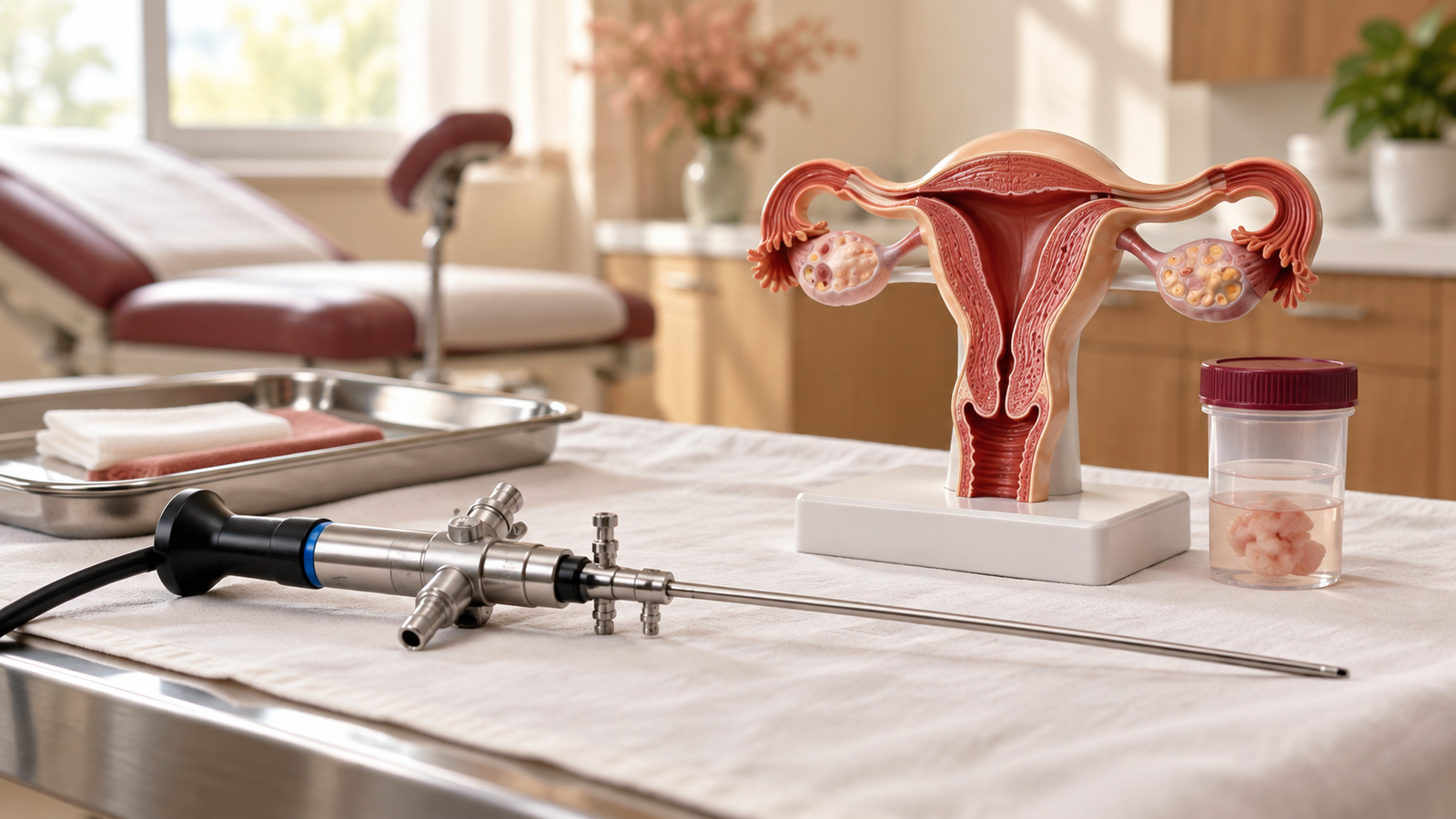
Planning a Hysteroscopy? Why the Cost Varies.
When a doctor advises hysteroscopy, the first thought is often practical: “How much will it cost?” That is a reasonable concern. But hysteroscopy cost in Kolkata can vary because hysteroscopy is not one fixed procedure.
Many patients hear only the word “hysteroscopy,” but the actual plan may be very different from another patient’s procedure.
For one woman, hysteroscopy may be a diagnostic look inside the uterus. For another, it may involve polyp removal, fibroid treatment, septum correction, biopsy, anaesthesia, pathology testing or a hospital-based operative setup.
At Dr Vinita Khemani’s clinic, the discussion usually starts with the woman’s symptoms, ultrasound findings, bleeding pattern, fertility plans, suspected uterine-cavity problem and whether treatment may be needed during the same sitting.
Patients trying to understand procedure planning may find it useful to review how Hysteroscopy evaluation and treatment connects ultrasound findings, uterine-cavity assessment, biopsy decisions, anaesthesia planning and follow-up into one structured care pathway.
What affects the cost of hysteroscopy?
Hysteroscopy cost in Kolkata depends on whether the procedure is diagnostic or operative, where it is performed, whether anaesthesia is needed, whether tissue is removed, and whether pathology testing is required. A diagnostic procedure usually involves viewing the uterine cavity, while operative hysteroscopy may include treatment such as polyp removal, fibroid resection, septum correction or biopsy. Fixed online prices should not be assumed without reviewing the patient’s reports, procedure type and clinical plan.
| Cost Factor | Why It May Change the Estimate |
|---|---|
| Diagnostic vs operative procedure | Looking inside the uterus is different from treating a polyp, fibroid, septum or adhesion |
| Procedure setting | Clinic, day-care setup, procedure room or operation theatre may have different charges |
| Anaesthesia type | No anaesthesia, local anaesthesia, sedation or general anaesthesia may change the estimate |
| Biopsy requirement | Tissue sampling may add pathology or laboratory charges |
| Polyp removal | Removal may need instruments, time and pathology examination |
| Fibroid treatment | Submucous fibroid size, number and depth can affect complexity |
| Septum correction | Requires operative planning and careful uterine-cavity assessment |
| Pathology testing | Removed tissue may need histopathology reporting |
| Facility charges | OT, day-care, nursing, medicines and recovery charges may vary |
| Medical complexity | Cervical narrowing, heavy bleeding, previous surgery or fertility concerns may affect planning |
ACOG explains that hysteroscopy may be used to diagnose or treat uterine problems, and RCOG notes that biopsy, polyp removal or fibroid removal may sometimes be done during hysteroscopy depending on the finding and consent: ACOG — Hysteroscopy and RCOG — Outpatient Hysteroscopy.
Why one hysteroscopy estimate may not match another
Two women may both be advised hysteroscopy, but their procedures may not be identical.
One may need a short diagnostic assessment because an ultrasound showed a possible cavity concern. Another may need operative hysteroscopy because a polyp, submucous fibroid, uterine septum or retained tissue is suspected.
That difference matters.
A diagnostic procedure may be shorter and less instrument-intensive. Operative hysteroscopy may need more preparation, anaesthesia support, surgical instruments, fluid monitoring, tissue handling and recovery observation.
So, comparing “hysteroscopy charges” without comparing the actual procedure can be misleading.
A better way to understand the estimate is to know what is being planned in the uterus and whether treatment is expected during the procedure.
Diagnostic hysteroscopy vs operative hysteroscopy
A diagnostic hysteroscopy is usually done to inspect the inside of the uterus. The doctor uses a thin telescope-like instrument to view the uterine cavity through the cervix.
It may help assess abnormal bleeding, suspected polyps, thickened lining, infertility-related cavity concerns, repeated miscarriage evaluation or unclear ultrasound findings.
Operative hysteroscopy goes one step further. If a problem is seen and treatment is planned, instruments may be used to remove or correct the issue.
| Point of Difference | Diagnostic Hysteroscopy | Operative Hysteroscopy |
|---|---|---|
| Main purpose | To look inside the uterus and confirm findings | To treat a problem seen inside the uterus |
| Common reasons | Abnormal bleeding, suspected cavity issue, fertility evaluation, unclear scan | Polyp removal, fibroid resection, septum correction, adhesion treatment, biopsy |
| Procedure time | Usually shorter | Often longer, depending on complexity |
| Anaesthesia need | May be minimal or local in selected cases | May need sedation or anaesthesia depending on procedure |
| Tissue removal | Not always required | Often required if polyp, fibroid or biopsy is involved |
| Pathology charges | Only if biopsy or tissue sample is taken | More likely if tissue is removed |
| Facility need | May be office/day-care in selected cases | May need operation theatre or day-care setup |
| Cost variation | Usually less variable | More variable because treatment complexity differs |
A hysteroscopy doctor in Kolkata may first review the ultrasound report, bleeding pattern, fertility history and suspected cavity finding before advising whether diagnostic or operative hysteroscopy is needed.
Why operative hysteroscopy may cost more
Operative hysteroscopy may cost more because it is not only a visual examination. It may involve treatment.
For example, removing a small polyp may be different from treating a larger submucous fibroid. Septum correction may need a different operative plan. A biopsy may add pathology charges. Anaesthesia support may change the setting and recovery process.
A hysteroscopic surgeon in Kolkata may explain whether the finding can be assessed only, sampled through biopsy or treated during the same sitting.
The complexity may also depend on whether the cervix is easy to access, whether bleeding is present, whether the uterine cavity view is clear, and whether the patient has had previous uterine procedures.
None of this should be guessed from a scan photo alone.
The estimate becomes clearer when the doctor reviews the report, explains the expected procedure and clarifies what may or may not be included.
Why polyp or fibroid removal changes the estimate
Polyp removal and fibroid treatment are common reasons why a hysteroscopy may shift from diagnostic to operative.
A small polyp may be removed with relatively simple instruments. A submucous fibroid may need more time, different equipment and more careful planning, especially if it is larger or partly embedded in the uterine muscle.
This is why hysteroscopy polyp removal cost cannot be judged by a base diagnostic estimate alone.
If tissue is removed, it may also be sent for histopathology. That report helps confirm what the tissue is and whether any further follow-up is needed.
Role of biopsy and pathology charges
A biopsy means a small tissue sample is taken and sent for examination under a microscope.
Not every hysteroscopy needs a biopsy. But biopsy may be advised if there is abnormal bleeding, thickened endometrium, suspicious-looking tissue, recurrent bleeding, postmenopausal bleeding, fertility-related concerns or a finding that needs confirmation.
If tissue is removed during polyp or fibroid treatment, it may also be sent for histopathology.
Pathology charges are often separate from the procedure cost. This is one reason the final estimate may differ from the base quote.
A clear estimate should mention whether tissue testing is expected and whether the pathology charge is included or billed separately.
Anaesthesia and hospital setting can change the estimate
Some hysteroscopy procedures may be possible with minimal pain control or local anaesthesia in selected patients. Some may need sedation or general anaesthesia, especially if operative treatment is planned.
Anaesthesia changes the setup.
It may involve an anaesthetist, monitoring, recovery time, medicines, OT support and day-care facility charges. A clinic-based diagnostic procedure and a hospital-based operative procedure will not usually have the same estimate.
This does not mean one option is always better than the other.
The right setting depends on the patient’s condition, pain tolerance, procedure complexity, safety needs and doctor’s assessment.
Hysteroscopy surgery in Newtown: what patients should clarify first
Patients searching for a hysteroscopy surgeon in Newtown or hysteroscopy surgery in Newtown should compare the planned procedure type, anaesthesia requirement, pathology charges and facility setting rather than only asking for one package price.
The location matters, but the procedure details matter more.
A patient may be searching locally because she wants convenience, faster access or a known gynecologic setup. That is understandable. Still, the estimate should be linked to the clinical plan, not only the clinic location.
For a safe and useful discussion, the doctor usually needs the ultrasound report, symptoms, medical history, previous procedure records and any fertility-related documents if relevant.
Why fixed online prices can be misleading
A fixed number may feel helpful, but hysteroscopy pricing without evaluation can confuse patients.
A woman advised diagnostic hysteroscopy for unclear bleeding may not need the same setup as someone needing operative fibroid removal. A patient needing biopsy and pathology testing may have a different estimate from someone needing only cavity inspection.
There may also be facility-related differences.
This is why responsible medical content should avoid unverified fixed-price claims. A safer cost discussion explains what affects the estimate, what is included, what may be extra and what the planned procedure involves.
That approach is more transparent and more aligned with ethical medical communication.
Appointment checklist before hysteroscopy
Carry these details for the consultation:
- ultrasound report and images, if available
- previous hysteroscopy or uterine surgery records
- menstrual history and bleeding pattern
- fertility-treatment records, if relevant
- current medicines, especially blood thinners or hormonal medicines
- history of allergy, anaesthesia reaction or major illness
- previous biopsy or pathology reports
- doctor’s previous prescription or referral note
- relevant blood reports, if already done
- any emergency visit notes related to bleeding or pain
The estimate is easier to understand when the consultation covers:
- diagnostic or operative procedure type
- expected tissue removal, if any
- biopsy or pathology requirement
- anaesthesia plan
- clinic, day-care or hospital setting
- expected recovery time
- included and separate charges
- follow-up visit and report review
This is not only about cost. It helps patients understand what will actually happen.
Recovery and follow-up after hysteroscopy
Recovery depends on whether the procedure is diagnostic or operative and whether biopsy, polyp removal or fibroid treatment is done.
Some women return to usual activity quickly after a diagnostic procedure. Others may need more rest if anaesthesia, biopsy or operative treatment was involved.
Mild cramping or light bleeding may occur after hysteroscopy, but heavy bleeding, fever, severe pain, foul-smelling discharge or feeling very unwell should be reported promptly.
If a biopsy or tissue removal was done, the pathology report may take additional time. The follow-up discussion should explain what the report means and whether any further care is needed.
FAQs
Why does diagnostic hysteroscopy cost less than operative hysteroscopy in many cases?
Diagnostic hysteroscopy often costs less because it is mainly used to inspect the uterine cavity. Operative hysteroscopy may involve polyp removal, fibroid treatment, septum correction, biopsy, anaesthesia, pathology and longer facility use. Ask for a written estimate that separates procedure charges, anaesthesia, pathology and hospital costs.
Can a polyp or fibroid be removed during the same hysteroscopy?
A polyp or selected submucous fibroid may be removed during the same hysteroscopy when the doctor has planned an operative procedure and the setting is suitable. The decision depends on size, location, bleeding, visibility, equipment, anaesthesia plan and patient consent. Confirm whether the planned procedure is diagnostic only or diagnostic with treatment.
Is anaesthesia always needed for hysteroscopy?
Anaesthesia is not always needed for every hysteroscopy. Some diagnostic procedures may be done with minimal or local pain control, while operative procedures may need sedation or general anaesthesia depending on complexity and patient comfort. Confirm the planned anaesthesia type before booking because it can affect preparation, recovery and estimate.
How long does hysteroscopy take, and what is recovery like after biopsy?
Diagnostic hysteroscopy is usually shorter than operative hysteroscopy, but the exact time depends on the finding, anaesthesia and whether biopsy or treatment is performed. Recovery after hysteroscopy and biopsy is often brief, but bleeding, cramps, anaesthesia effects and pathology follow-up can vary by patient. Follow the doctor’s instructions on activity limits, warning symptoms and report review.
Your next step before planning hysteroscopy
Hysteroscopy cost should not be judged by one fixed online number. The estimate depends on what needs to be done inside the uterus.
A diagnostic procedure, operative procedure, biopsy, polyp removal, fibroid treatment, septum correction, anaesthesia plan, pathology testing and hospital setting can all change the final estimate.
If hysteroscopy has been advised, carry your ultrasound report, symptom history and previous treatment records for a qualified gynecologic review. Dr Vinita Khemani can review the findings in context and explain what type of hysteroscopy may be appropriate, what factors may affect the estimate and what should be clarified before booking.
Medical Disclaimer:
This article is for general patient education only and should not replace personal medical advice, diagnosis, procedure planning, anaesthesia advice, pathology interpretation, surgical consent or cost counselling. Hysteroscopy planning and cost estimation depend on symptoms, scan findings, procedure type, anaesthesia plan, hospital setting, biopsy/pathology needs, complexity and individual medical assessment. Please consult a qualified gynecologist for personalized guidance.
Have questions about this topic?
Book a consultation with Dr. Vinita Khemani to address your specific concerns and get a personalized care plan.