

Medically reviewed by Dr. Vinita Khemani, Senior Gynecologist & Obstetrician
Last updated: June 2026
Heavy bleeding after 35 is easy to dismiss at first. One month feels unusually heavy, then another. You start carrying extra pads, avoiding long travel during periods, waking at night to check for staining, or feeling drained after every cycle.
Many women search for hysteroscopy surgery in Newtown only after medicines, iron tablets, or repeated ultrasound reports have not given a clear answer. But hysteroscopy is not the first step for every woman. It becomes useful when the doctor suspects that the cause of bleeding may be inside the uterine cavity.
For women with persistent heavy periods, spotting between cycles, suspected polyps, fibroids inside the womb, or fertility-related uterine concerns, hysteroscopy-based uterine evaluation can help identify what a routine scan may not always explain clearly.
When is hysteroscopy recommended for heavy bleeding?
Hysteroscopy is recommended for heavy bleeding when a doctor suspects a problem inside the uterus, such as a polyp, submucosal fibroid, thickened lining, retained tissue, or an unexplained source of abnormal bleeding. It may also be advised when bleeding continues after medicines, ultrasound findings are unclear, or the uterine cavity needs evaluation before fertility treatment.
A doctor may consider hysteroscopy when there is:
- Heavy bleeding that affects work, sleep, travel, or daily routine
- Bleeding between periods, after sex, or after menopause
- Suspected uterine polyp or fibroid on ultrasound
- Repeated miscarriage or infertility where the uterine cavity needs checking
- Bleeding that keeps returning despite initial treatment
The key point is simple: hysteroscopy is used when the inside of the uterus needs a closer look.
What is Hysteroscopy, and How Does It Help?
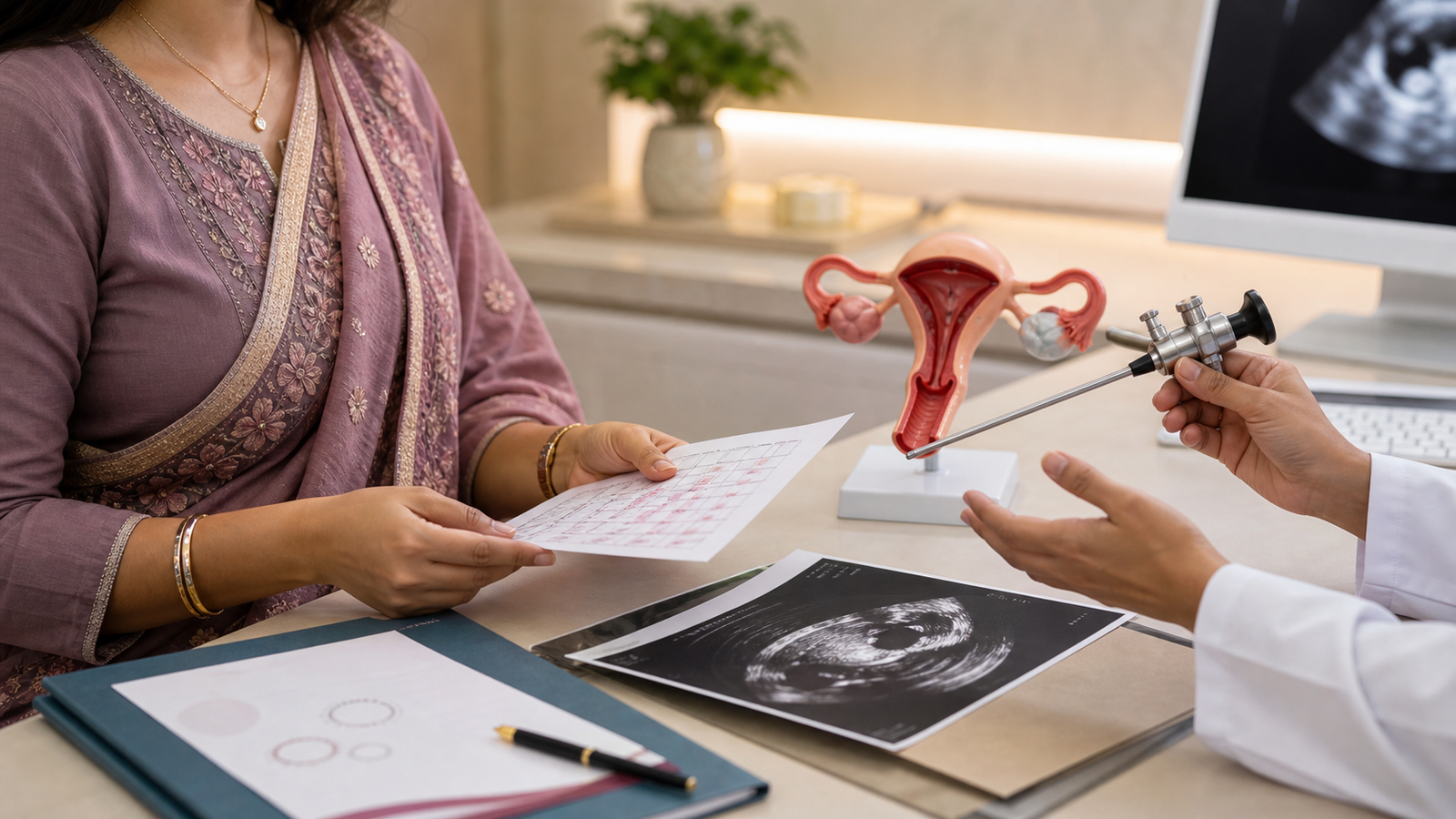
Hysteroscopy is a procedure where a thin telescope-like instrument is passed through the vagina and cervix to look inside the uterus. There is no cut on the abdomen. The doctor sees the uterine cavity on a screen and checks the lining, openings, shape, and any abnormal growth inside the womb.
This is why hysteroscopy can be helpful in heavy bleeding. Ultrasound gives useful information, but it may not always show the uterine cavity clearly. A small polyp, a fibroid pushing into the cavity, an adhesion, or an abnormal-looking patch of lining may need direct visualization.
Some hysteroscopies are done only to diagnose the problem. Some are planned so that the doctor can treat a finding during the same sitting, such as removing a polyp or selected fibroid. The exact plan depends on symptoms, scan findings, age, bleeding pattern, and whether tissue sampling is needed.
Why Heavy Bleeding After 35 Needs a Proper Uterine Evaluation
A heavy period once in a while may not be alarming. A changed pattern after 35 deserves more attention.
Many women describe it in everyday language: “My periods used to end in four days, now they continue for eight.” “I pass clots.” “I need to change pads every hour.” “I feel weak after every cycle.” These details are not small. They tell the doctor how much blood loss may be happening and whether anemia is developing.
ACOG explains abnormal uterine bleeding can include heavy bleeding during periods, bleeding between periods, bleeding after sex, and bleeding after menopause. Their patient guidance on abnormal uterine bleeding is a useful reference for understanding when bleeding patterns should be checked.
After 35, the aim is not to create fear. The aim is to avoid months of blind treatment when the actual cause may be a polyp, fibroid, thickened lining, or another uterine cavity problem.
Polyps and Fibroids: Two Common Reasons Hysteroscopy Is Discussed
Uterine polyps are small growths from the lining of the womb. Some stay silent. Some cause heavy periods, spotting between periods, or bleeding after menopause. A polyp may be suspected on ultrasound, but hysteroscopy allows the doctor to see it more directly.
Fibroids are different. Not every fibroid causes heavy bleeding. A fibroid sitting outside the uterus may behave differently from one pushing into the uterine cavity. The fibroids that grow into or distort the cavity are more likely to cause heavy flow, clots, and bleeding that does not settle easily.
This is where hysteroscopy becomes practical. It helps the doctor check whether a growth is actually inside the cavity and whether hysteroscopic removal is possible. The decision is not automatic. Size, position, symptoms, fertility plans, and safety all matter.
Diagnostic vs Operative Hysteroscopy
Many patients hear “hysteroscopy” and immediately think of surgery. That is not always accurate.
Diagnostic hysteroscopy means the doctor is mainly looking inside the uterus to find the cause. Operative hysteroscopy means the doctor may treat something during the procedure, such as removing a polyp, selected fibroid, adhesion, or taking a biopsy.
Before the procedure, ask one clear question: “Is this diagnostic, operative, or both if needed?” That answer will help you understand preparation, anesthesia, expected time, cost, and recovery.
In Dr. Vinita Khemani’s practice, the discussion usually begins with the bleeding story: how many days, how heavy, clots or no clots, pain pattern, bleeding between periods, postmenopausal bleeding, ultrasound findings, hemoglobin level, and whether pregnancy is being planned. The procedure is considered only when that story points toward a cavity-related problem.
Can Hysteroscopy Help in Infertility Evaluation?
Yes, but not every woman trying to conceive needs hysteroscopy.
It may be advised when the doctor suspects something inside the uterus could affect implantation or pregnancy continuation. A small polyp, adhesion, septum, or cavity distortion can sometimes be missed or not fully understood on routine imaging.
For women going through fertility evaluation, hysteroscopy helps answer a specific question: is the uterine cavity healthy enough for implantation? If the scan suggests a cavity issue, or if there is a history of repeated pregnancy loss, the doctor may consider it as part of the workup.
Pain, Recovery, and What to Expect After the Procedure
Pain is one of the first things women ask about. The answer depends on the type of hysteroscopy, whether it is diagnostic or operative, whether anesthesia is used, and the patient’s pain tolerance.
Some women feel cramping similar to period pain. Operative procedures may need more preparation and observation. Light bleeding or mild cramps can happen afterward. The doctor may advise rest, medicines, and avoiding certain activities for a short period depending on what was done.
Call your doctor if there is heavy bleeding, fever, foul-smelling discharge, worsening pelvic pain, or dizziness after the procedure. These are not symptoms to ignore.
What Affects Hysteroscopy Cost in Kolkata?
Hysteroscopy cost in Kolkata depends on whether the procedure is diagnostic or operative, the hospital setup, anesthesia, biopsy, polyp or fibroid removal, histopathology, medicines, and follow-up requirements.
A simple diagnostic evaluation will not cost the same as a planned operative procedure. If tissue is removed and sent for lab testing, that also changes the estimate. Facility charges may differ across locations, including Newtown, Salt Lake, Central Kolkata, or other hospital setups.
Instead of asking only for the lowest cost, ask what is included. Procedure charges, anesthesia, OT or facility charges, biopsy, histopathology, medicines, and post-procedure review should be clearly explained.
Why Newtown Comes Up in Many Hysteroscopy Searches
Newtown has become a practical consultation location for many women from Newtown, Salt Lake, Rajarhat, Dum Dum, Lake Town, and nearby parts of Kolkata. Dr. Vinita Khemani also visits Neotia Bhagirathi Woman and Child Care Centre, Newtown, which makes this location relevant for patients who are already looking for a hysteroscopy surgeon in Newtown.
That said, heavy bleeding after 35 is not a Newtown-specific problem. Women from any part of Kolkata or nearby areas can face abnormal bleeding, polyps, fibroids, or uterine cavity concerns. The location matters only because timely evaluation becomes easier when the patient knows where she can carry her reports and discuss the next step.
Doctor’s Insight
Dr. Vinita Khemani often explains that heavy bleeding is not judged only by the number of pads used. The full pattern matters: duration, clots, weakness, cycle change, spotting, age, ultrasound findings, hemoglobin level, and whether bleeding appears after sex or after menopause.
A hysteroscopy is useful when the story points toward something inside the uterus that needs to be seen directly. It is not about doing a procedure for every heavy period. It is about not missing a treatable cause.
FAQs
Is hysteroscopy painful?
Hysteroscopy may cause mild to moderate cramping, similar to period pain, but the experience varies from patient to patient. Pain depends on whether the procedure is diagnostic or operative, whether anesthesia or sedation is used, cervical tightness, and individual pain tolerance. Ask your doctor before the procedure what type of pain control will be used and how long observation may be needed afterward.
What is the purpose of a hysteroscopy?
The purpose of a hysteroscopy is to look directly inside the uterus and find the cause of symptoms such as heavy bleeding, bleeding between periods, suspected polyps, fibroids, infertility concerns, or repeated miscarriage. It helps the doctor see the uterine lining, cavity shape, and any abnormal growth that may not be clear on ultrasound. If a problem is seen, the doctor may plan treatment, biopsy, or removal depending on the finding.
Is hysteroscopy painful or done under anesthesia?
Hysteroscopy may cause cramping, but pain varies depending on whether it is diagnostic or operative. Anesthesia or sedation may be used depending on the procedure type, patient comfort, and hospital protocol. Ask your doctor beforehand what kind of pain control is planned.
Can a cyst be removed during a hysteroscopy?
An ovarian cyst cannot be removed during a hysteroscopy because hysteroscopy looks inside the uterus, not the ovaries. However, a uterine polyp, selected submucosal fibroid, adhesion, or abnormal tissue inside the uterine cavity may sometimes be treated during operative hysteroscopy. If the cyst is on the ovary, a different surgical approach such as laparoscopy may be considered after evaluation.
What happens to the uterus after a hysteroscopy?
After hysteroscopy, the uterus usually returns to normal as the mild irritation from the procedure settles. Light bleeding, spotting, or cramping may happen for a few days, especially if a biopsy, polyp removal, or fibroid treatment was done. Contact your doctor if you develop heavy bleeding, fever, foul-smelling discharge, severe pelvic pain, or dizziness.
What is the most common complication of hysteroscopy?
The most common minor problems after hysteroscopy are cramping, light bleeding, or spotting. Less common complications can include infection, heavy bleeding, injury to the uterus, fluid-related problems, or anesthesia-related issues, especially during operative procedures. Ask your doctor what warning signs to watch for based on the exact type of hysteroscopy planned.
How should I prepare before asking about hysteroscopy cost?
Carry your ultrasound report, hemoglobin test, previous prescriptions, bleeding history, medicine list, and fertility history if relevant. Cost depends on whether the procedure is diagnostic or operative, anesthesia, biopsy, tissue removal, lab testing, facility charges, and follow-up. Ask for an estimate that separates each component clearly.
Local Consultation for Heavy Bleeding and Hysteroscopy in Newtown
If heavy bleeding, spotting, ultrasound findings, or fertility-related uterine concerns are creating uncertainty, a focused consultation can help decide whether medicines, monitoring, biopsy, or hysteroscopy is the right next step. Patients who prefer Newtown can consult Dr. Vinita Khemani at Neotia Bhagirathi Woman and Child Care Centre, Newtown, while women from other parts of Kolkata can also seek evaluation based on symptoms and reports rather than location alone.
Practical Next Step
Before your consultation, note how many days you bleed, whether clots are present, how often pads need changing, whether bleeding occurs between periods or after sex, and whether you feel tired or dizzy after cycles. Carry your latest ultrasound, blood reports, and medicine history. A clear bleeding history often helps the doctor decide whether hysteroscopy can genuinely help find the cause.
Have questions about this topic?
Book a consultation with Dr. Vinita Khemani to address your specific concerns and get a personalized care plan.