

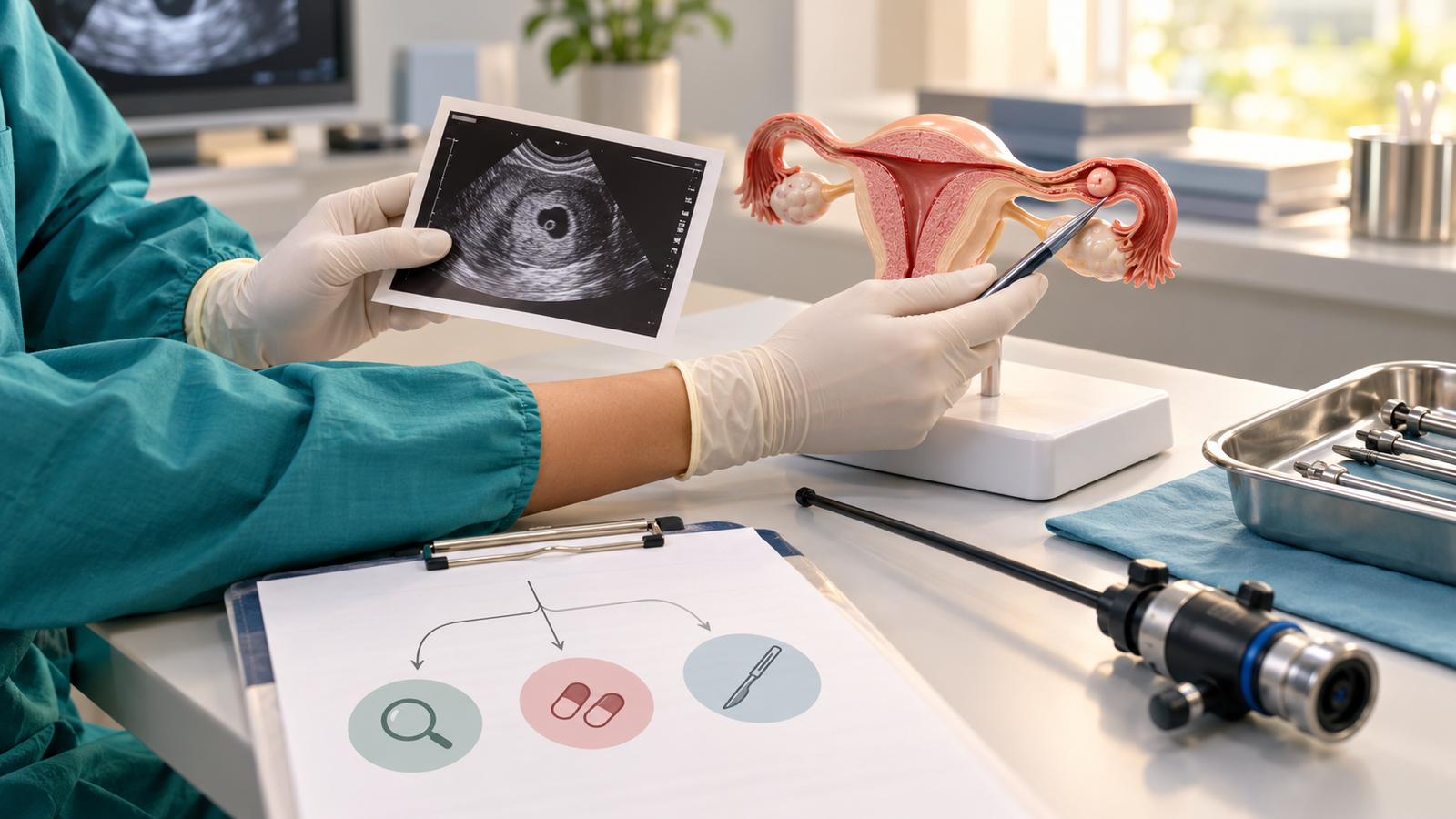
An ectopic pregnancy diagnosis can feel sudden and frightening. Many women hear the word “ectopic” for the first time in an emergency setting, when they are scared, in pain, and trying to understand whether the pregnancy can be saved.
An ectopic pregnancy usually develops outside the uterus, most often in the fallopian tube. It cannot continue like a normal pregnancy and needs timely medical care.
For women searching for laparoscopic surgery in Kolkata after an ectopic pregnancy diagnosis, the safest message is this: not every ectopic pregnancy is treated the same way. Some cases may be managed with close monitoring or medicine when strict criteria are met. Others may need surgery, especially when there is severe pain, suspected rupture, internal bleeding, or clinical instability.
At Dr Vinita Khemani’s clinic, patients reviewing early pregnancy pain, bleeding, beta-hCG results, ultrasound findings or emergency reports may benefit from understanding how gynecologic laparoscopic surgery may fit into ectopic pregnancy care when surgery is clinically advised.
Can an ectopic pregnancy be treated with laparoscopy?
Yes, an ectopic pregnancy can be treated with laparoscopy when surgery is needed and the patient’s condition allows a minimally invasive approach. The treatment decision depends on stability, pain, bleeding, ultrasound findings, beta-hCG level, rupture risk, fertility goals and emergency status. If rupture or heavy internal bleeding is suspected, urgent surgical care should not be delayed.
| Clinical Situation | Usual Treatment Consideration |
|---|---|
| Stable patient, early diagnosis, low-risk findings | Careful monitoring may be considered in selected cases |
| Stable patient meeting medical-treatment criteria | Methotrexate may be discussed with strict follow-up |
| Severe one-sided pelvic pain | Urgent assessment is needed |
| Suspected rupture or internal bleeding | Surgery may be required urgently |
| Ectopic pregnancy in the fallopian tube | Laparoscopy may be considered when suitable |
| Tube badly damaged or actively bleeding | Tube removal may be safer |
| Fertility concern with suitable tube condition | Conservative surgery may be discussed in selected cases |
| One healthy opposite tube | Future pregnancy may still be possible |
| Follow-up not possible | Medical management may not be safe |
| Unclear diagnosis | Repeat beta-hCG, ultrasound or specialist review may be needed |
ACOG — Ectopic Pregnancy explains that ectopic pregnancy may be treated with medication or surgery, and that surgery is typically performed with laparoscopy when appropriate.
Why ectopic pregnancy needs urgent evaluation
An ectopic pregnancy needs attention because it can become an emergency. If it grows in the fallopian tube, the tube may stretch, bleed, or rupture.
Symptoms are not always dramatic in the beginning. Some women notice spotting. Some feel one-sided pelvic pain. Some feel dizzy, weak, or faint. Shoulder-tip pain, sudden severe abdominal pain, vomiting, or heavy bleeding should never be ignored.
If pregnancy is possible and there is pelvic pain or bleeding, urgent medical review is safer than waiting.
This is not a condition to manage through home remedies, repeated painkillers, or online advice. The right next step depends on examination, ultrasound, beta-hCG blood tests, symptoms and the woman’s stability.
Medical treatment versus surgery: how doctors decide
The treatment decision is not made from one report alone.
Doctors usually review whether the patient is stable, whether pain is mild or severe, whether bleeding is present, what the ultrasound shows, what the beta-hCG level is, whether rupture is suspected, and whether the patient can return for close follow-up.
Medical treatment with methotrexate may be considered only in selected stable cases. It requires careful monitoring because pregnancy hormone levels must fall safely over time.
Surgery may be advised when the woman is unstable, has severe pain, has suspected rupture, has significant internal bleeding, cannot safely take medicine, cannot complete follow-up, or when scan findings make surgery the safer option.
NICE — Management of Tubal Ectopic Pregnancy guidance separates expectant, medical and surgical management based on clinical stability, symptoms, ultrasound findings, hCG level and ability to return for follow-up.
When does laparoscopic surgery in Kolkata become relevant for ectopic pregnancy?
Laparoscopic surgery in Kolkata may become relevant when an ectopic pregnancy needs surgical treatment and the patient’s condition allows a keyhole approach.
Laparoscopy is done through small cuts in the abdomen using a camera and fine instruments. It may allow the surgeon to inspect the pelvis, identify the affected tube, assess bleeding, and treat the ectopic pregnancy.
For patients reviewing advanced laparoscopic procedures, ectopic pregnancy surgery is usually considered only when clinical findings make surgery safer than monitoring or medicine.
This distinction matters. Laparoscopy is not chosen only because it is modern or less invasive. It is considered when it matches the patient’s condition, emergency status and surgical safety.
What happens during ectopic pregnancy surgery?
The exact surgical plan depends on what the doctor finds before and during surgery.
In many cases, the ectopic pregnancy is in the fallopian tube. If the tube is badly damaged or bleeding, the surgeon may remove the affected tube. This is called salpingectomy.
In selected cases, the surgeon may remove the ectopic pregnancy while trying to preserve the tube. This is called salpingotomy or conservative tubal surgery. It may require closer follow-up because pregnancy tissue can sometimes persist.
The decision is not emotional alone. It depends on safety, bleeding, tube condition, the other tube, future fertility goals, and whether follow-up is possible.
Tube removal and future fertility: what women should know
Hearing that a fallopian tube may need removal can be deeply upsetting. Many women immediately worry that pregnancy will never happen again.
That fear is understandable.
Future fertility depends on many factors: the health of the other tube, age, previous pelvic infection, previous surgery, ovarian reserve, partner factors, and whether there has been more than one ectopic pregnancy.
If one tube is removed and the other tube is healthy, pregnancy may still be possible naturally. But every future pregnancy should be checked early to confirm that it is developing inside the uterus.
The next positive pregnancy test should not be handled casually. Early beta-hCG monitoring and ultrasound timing may be discussed by the treating doctor.
When keyhole surgery may not be the safest route
Keyhole surgery in Kolkata is often discussed because it may mean smaller cuts and faster recovery in suitable cases. But it is not always the safest route.
Open surgery may be needed if there is heavy bleeding, severe instability, difficult anatomy, extensive adhesions, poor visibility, or any situation where the surgeon believes a larger incision is safer.
This should not be seen as a failed plan. In emergency gynecology, safety comes first.
The safest surgery is the one that controls bleeding, protects the patient’s life, and manages the ectopic pregnancy appropriately.
Surgeon-focused clinical perspective
Ectopic pregnancy surgery is not only about technique. It is decision-making under pressure.
A laparoscopic surgery doctor may explain whether laparoscopy, tube removal, conservative tubal surgery, or emergency open surgery is safest based on bleeding, stability, tube condition and fertility goals.
A careful surgical discussion should cover:
- why surgery is being advised
- whether laparoscopy is suitable
- whether tube removal may be needed
- whether conservative surgery is possible
- what follow-up is required
- what future pregnancy monitoring may involve
- when emergency care should not be delayed
No responsible surgeon should promise the same route for every ectopic pregnancy.
Recovery after laparoscopic ectopic pregnancy surgery
Recovery varies from woman to woman.
It depends on whether there was rupture, how much bleeding occurred, whether the tube was removed, anemia level, pain level, and overall health. Many women recover faster after laparoscopy than after open surgery, but rest is still important.
The recovery is not only physical. An ectopic pregnancy can also feel like a pregnancy loss, an emergency, and a surgical event at the same time.
After surgery, the doctor may discuss wound care, pain medicine, activity limits, bleeding expectations, follow-up visits, warning symptoms, and future pregnancy planning. If methotrexate was used before or after treatment, follow-up blood tests must be completed as advised.
Warning signs: when not to wait
Seek emergency care immediately if you have a positive pregnancy test or possible pregnancy with:
- severe pelvic or abdominal pain
- shoulder-tip pain
- dizziness or fainting
- heavy bleeding
- vomiting with pain
- sudden weakness
- worsening one-sided pain
These symptoms may suggest internal bleeding or rupture.
Do not wait for a scheduled clinic visit if symptoms are severe. Ectopic pregnancy can become life-threatening.
What to carry if ectopic pregnancy is suspected
If possible, carry your pregnancy test result, ultrasound report, beta-hCG blood test reports, blood group report, previous pregnancy records, previous ectopic pregnancy records, fertility treatment documents, medicine list and allergy history.
But do not delay emergency care to collect papers.
If pain is severe, bleeding is heavy, or you feel faint, go to an emergency facility first.
FAQs
Can ectopic pregnancy be treated without surgery?
Yes, some ectopic pregnancies may be treated without surgery when the patient is stable and strict criteria are met. Options may include close monitoring or methotrexate, but follow-up beta-hCG testing and medical review are essential. Severe pain, rupture concern, internal bleeding or instability usually shifts the plan toward urgent surgical assessment.
Is laparoscopy always possible for ectopic pregnancy?
No, laparoscopy is not always possible or safest for every ectopic pregnancy. Heavy internal bleeding, unstable condition, difficult anatomy or emergency findings may require a different surgical approach. The surgeon chooses the safest route based on the patient’s condition and operative findings.
Will removing one fallopian tube affect future pregnancy?
Removing one fallopian tube may still allow future pregnancy if the other tube and ovulation are functioning well. Fertility also depends on age, previous infections, pelvic disease, ovarian reserve and partner factors. After any future positive pregnancy test, early review is important to confirm that the pregnancy is inside the uterus.
What is the difference between salpingectomy and salpingotomy?
Salpingectomy means removing the affected fallopian tube. Salpingotomy means opening the tube to remove the ectopic pregnancy while trying to preserve the tube in selected cases. The choice depends on bleeding, tube damage, fertility goals, opposite tube status and the need for safe follow-up.
How long does recovery take after laparoscopic ectopic pregnancy surgery?
Recovery after laparoscopic ectopic pregnancy surgery varies depending on bleeding, anemia, pain, surgery type and overall health. Many women resume light activities gradually, but heavy work, exercise and intercourse should follow the surgeon’s advice. Attend follow-up visits and report fever, increasing pain, heavy bleeding or wound problems.
Your next step after an ectopic pregnancy diagnosis
An ectopic pregnancy diagnosis can feel overwhelming. Treatment may involve monitoring, medicine, or surgery depending on the situation.
If surgery is advised, laparoscopy may be considered when clinically suitable. The surgical plan may involve removing the affected tube or, in selected cases, conservative surgery. Future fertility should be discussed honestly, including the need for early monitoring in the next pregnancy.
If you have been advised surgery or need clarity after an ectopic pregnancy diagnosis, consult Dr Vinita Khemani with your scan reports, beta-hCG reports and emergency notes. A careful review can help explain what treatment option is safest and what follow-up may mean for future pregnancy planning.
Medical Disclaimer:
This article is for general patient education only and should not replace emergency care, personal medical advice, diagnosis, imaging interpretation, methotrexate counselling or surgical planning. Ectopic pregnancy can be life-threatening if rupture or internal bleeding occurs. Treatment decisions depend on clinical stability, symptoms, ultrasound findings, beta-hCG levels, bleeding, rupture risk, fertility goals, medical history, surgical findings and emergency status. Please seek urgent medical care for severe pain, dizziness, fainting, heavy bleeding or suspected ectopic pregnancy.
Have questions about this topic?
Book a consultation with Dr. Vinita Khemani to address your specific concerns and get a personalized care plan.