
You're sitting in a new doctor's clinic when she asks, "Have you had an ultrasound before?"
You have. Perhaps more than once. But the latest report is buried somewhere in your phone, and the older one is probably in a file at home.
Then comes another question about your last Pap smear. You remember having the test, but not the year or the result.
It's a familiar situation when changing doctors.
If you're visiting a new gynecologist in North Kolkata, a little preparation can make your first appointment more useful. You don't need to carry every medical document you've collected over the years. You need the records that explain your health history and what is troubling you now.
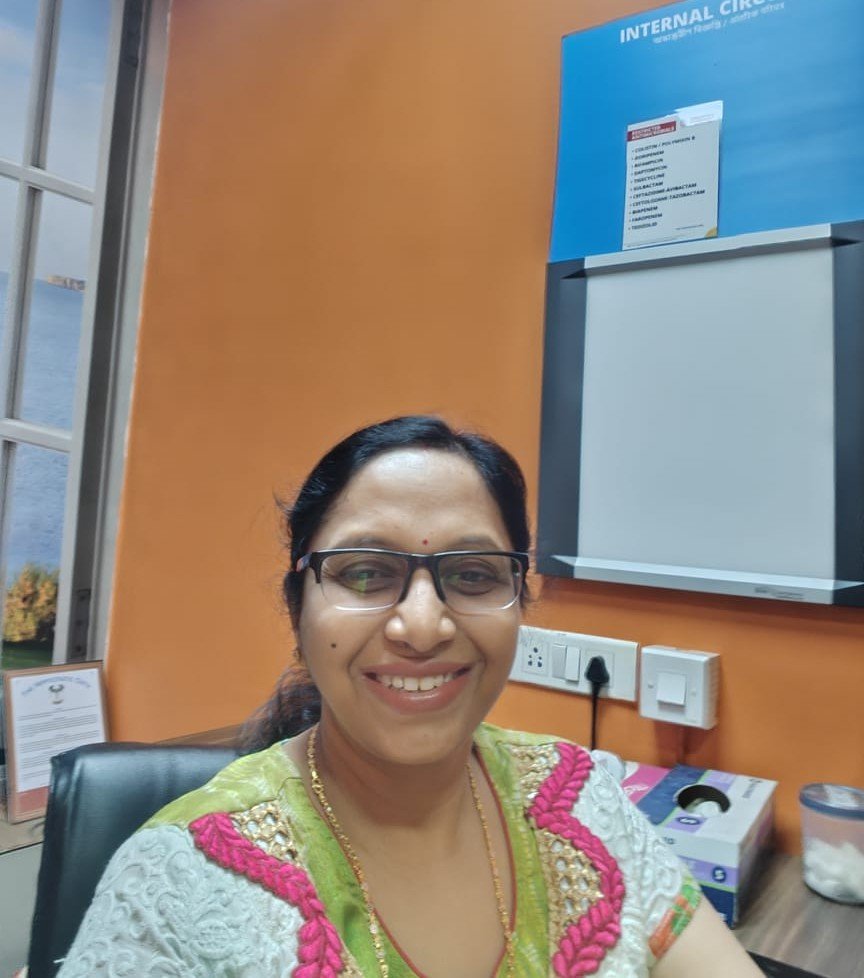
For women looking for a female gynecologist in Kolkata, Dr Vinita Khemani's consultation information and clinic details provide a starting point for planning an appointment.
Before you go, here's how to decide what belongs in your medical file, what can stay at home and what to do if some reports are missing.
What Should I Bring to My First Appointment With a New Gynecologist?
Bring your recent prescriptions, current medicine list, relevant ultrasound and blood test reports, Pap smear or HPV results, pregnancy and delivery records, and any previous surgery or biopsy reports. Also note your last menstrual period, current symptoms and known allergies. These details help your gynecologist understand your history and decide whether further assessment is needed.
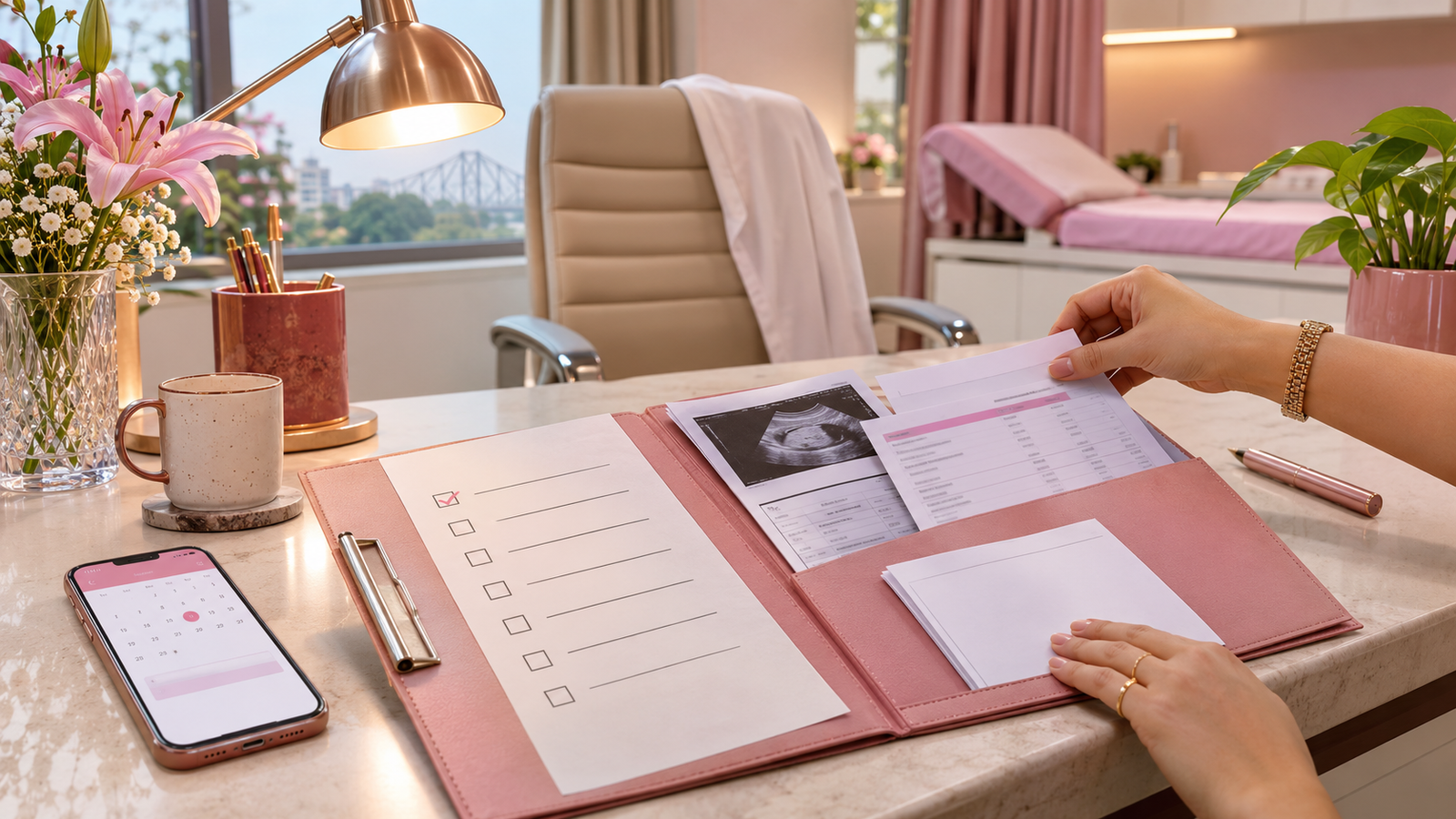
Your first-visit checklist:
- Recent prescriptions and current medications, including doses
- Previous ultrasound reports and relevant blood tests
- Pap smear, HPV screening and follow-up reports
- Pregnancy and delivery summaries, where applicable
- Previous surgical notes and pathology reports
- Menstrual dates and a short description of symptoms
- Known allergies and previous medicine reactions
- Details of any ongoing treatment or pending follow-up
If you don't have everything, that's fine. Start with the information you can find.
Only Have 10 Minutes to Prepare? Start Here
You may be booking an appointment between work meetings, managing a household move or trying to locate reports from a hospital you haven't visited in years.
You don't need to spend an entire evening organising paperwork.
Start with three things.
First, write down why you're going. Is it irregular periods, pelvic pain, unusual discharge or simply a routine consultation? Note when the concern started and what has changed.
Second, gather reports connected to that concern. If the appointment is about an ovarian cyst, a previous pelvic ultrasound may be more useful than a collection of unrelated blood tests.
Third, make a current medicine list. Include the medicine name, strength, dose, how often you take it and any supplements or herbal preparations.
The American College of Obstetricians and Gynecologists offers similar advice in its guide to making the most of your healthcare visit, including preparing symptoms, medical history and medication details.
A short, accurate summary is usually more helpful than an enormous folder you haven't had time to sort.
Which Old Medical Reports Are Still Useful?
One question often comes up when changing gynecologists: Should I bring reports from five or ten years ago?
Sometimes, yes.
An old ultrasound may show whether a cyst was previously present. A pathology report can establish what was found in tissue removed during an operation. A previous abnormal cervical screening result may affect what follow-up is needed.
But an old report doesn't always describe your current health.
For example, an ultrasound showing normal ovaries three years ago cannot rule out a new problem today.
The table below can help you decide what to bring.
| Medical record | Why your new gynecologist may need it | When new testing or follow-up may be needed |
|---|---|---|
| Pelvic ultrasound | Shows previous findings involving the uterus or ovaries | When symptoms change or a finding requires reassessment |
| Blood test reports | Provides earlier investigation results | When current symptoms or medical circumstances justify retesting |
| Pap smear or HPV report | Documents cervical screening history | According to prior results, age, risk and applicable guidance |
| Previous prescriptions | Shows treatment history and medication response | When symptoms persist, medicines change or side effects occur |
| Pregnancy or delivery summary | Records relevant obstetric history | When new pregnancy-related or gynecological concerns arise |
| Operative notes | Describes findings and procedures during surgery | If current symptoms require further assessment |
| Histopathology report | Records the diagnosis made from examined tissue | If new findings warrant investigation or specialist review |
An operative report or pathology result does not become invalid simply because it is old. It remains part of your history.
What may change is whether the doctor needs new information about your present condition.
Don't Forget Your Pap Smear or HPV Reports
Cervical screening is easy to forget when you're gathering old prescriptions and ultrasound reports.
But your previous results can make a meaningful difference to the discussion.
A Pap smear looks for abnormal changes in cervical cells. An HPV test checks for certain high-risk types of human papillomavirus associated with cervical cancer.
If you have undergone either test, bring the report rather than relying only on memory.
The actual result matters, particularly if you were previously advised to return for follow-up.
A normal screening result does not necessarily mean another test is due simply because you have changed gynecologists. Likewise, a previous abnormal report should not be ignored because you have moved to a different city or clinic.
The CDC's cervical cancer screening guidance explains the difference between Pap and HPV testing and how screening history can affect follow-up decisions.
The CDC guidance is written for the United States. Screening recommendations for women in India should be discussed with a qualified clinician, taking account of local guidance, age, previous results and individual risk.
If you can't remember when you were last screened, tell the doctor that the date is uncertain. There's no need to guess.
Previous Pregnancy and Delivery Records May Still Matter
If your last pregnancy was several years ago, you might assume those hospital papers have no relevance to a new gynecology appointment.
Some of them may still provide useful information.
For example, a history of gestational diabetes, high blood pressure during pregnancy, miscarriage or an earlier ectopic pregnancy may be relevant when reviewing your health.
Previous caesarean deliveries can also form part of your surgical history.
You don't need to carry every routine blood test from an uncomplicated pregnancy.
A delivery discharge summary, records of significant complications and important operative documents are often a more practical starting point.
If you remember a complication but cannot find the report, mention what happened and approximately when.
Your account of your medical history is valuable, even when the paperwork is incomplete.
Had Surgery Before? Keep These Three Documents Together
Think about someone who had an ovarian cyst removed six years ago.
She remembers being told that the operation went well, but she doesn't know whether the cyst was completely removed or what the laboratory found.
That uncertainty can be resolved by the surgical records, if they're available.
Three documents are particularly useful.
The discharge summary explains why you were admitted, which procedure was performed and how your immediate recovery progressed.
The operative note describes what the surgeon actually found and did.
The histopathology report records the laboratory findings from tissue removed during surgery or biopsy.
These reports are not interchangeable.
If you've had a hysterectomy, for instance, the operative note may explain whether your ovaries or cervix were preserved. If you've had a cyst removed, the pathology report may identify the type of cyst.
When you change doctors, these details can prevent confusion about previous treatment.
If you have only one of the documents, bring it. You can ask the previous hospital how to obtain the remaining records if they become necessary.
Your Medicine List Should Include More Than Medicine Names
It's common to remember the colour or shape of a tablet but not the name or dose.
That becomes a problem when a new doctor needs to review what you're taking.
If possible, photograph the medicine packaging or create a simple list showing the medicine name, strength, dose and frequency.
Include medicines prescribed by other specialists, such as those for thyroid conditions, diabetes or high blood pressure.
Also mention over-the-counter painkillers, vitamins and herbal supplements.
If a medicine previously caused a rash, severe nausea, unusual bleeding or another significant reaction, include that information too.
Do not stop or change prescribed medication simply because you're switching doctors.
The new gynecologist can review the list and advise whether any adjustments are necessary.
Make a Short Note About Your Periods and Symptoms
You do not need a complicated chart.
A few clear details can help the doctor understand the problem much faster.
If your periods are regular, note the first day of your last menstrual period and the approximate number of days between cycles.
If they are irregular, record the dates of recent bleeding episodes.
A useful description might be:
"My periods were usually about 30 days apart, but for the past three months they've been coming every 18–20 days."
That's much more informative than saying your cycle has been unusual.
For pelvic pain, note where it occurs, when it began and whether it changes during menstruation.
For symptoms such as unusual discharge or discomfort, mention when they started and whether you've already taken treatment.
You can use your phone's notes app. The format matters less than the accuracy.
Missing Reports? Your Appointment Can Still Go Ahead
Perhaps your old gynecologist practised in another city. Maybe the hospital records are still at your parents' home. Or perhaps you have several PDF reports mixed into years of WhatsApp messages.
You don't need to recover everything before seeing a new doctor.
Start with what you can find.
If the previous medical centre has a patient portal, you may be able to download test results. Otherwise, contact the records department to ask about obtaining copies.
Save digital reports with names that include the date and type of investigation, such as Ultrasound_August_2025.pdf.
For easy reference, create folders for prescriptions, scans, screening results, pregnancy records and surgery documents.
Whenever possible, keep complete PDFs rather than cropped screenshots. Missing dates, measurements or report impressions can make a document difficult to interpret.
Your medical records are private. Check how the clinic accepts documents before sending them through email or messaging apps, and use an appropriately secure sharing method.
Most importantly, don't postpone care for a new or concerning symptom simply because you haven't found your old files.
Will a New Gynecologist Repeat All Your Tests?
Not necessarily.
Changing doctors alone isn't a reason to repeat every investigation.
Your new gynecologist may be able to use a previous report as background information, particularly when it documents an established diagnosis or an earlier procedure.
But some tests describe your health at a particular moment.
A blood result from two years ago cannot always answer a question about symptoms that started last week.
The decision to repeat a test should have a clear clinical reason.
For example, if you previously had a normal pelvic ultrasound but now have persistent new pain, updated imaging may be appropriate.
If you recently underwent cervical screening, another test may not be necessary immediately, depending on the result and your screening history.
You can ask why a proposed investigation is needed and what it is expected to clarify.
Understanding that reason is part of making an informed decision about your care.
Finding a New Gynecologist in North Kolkata
Moving to Lake Town, Bangur Avenue, Dum Dum or a nearby neighbourhood can make returning to your previous clinic inconvenient, especially when follow-up visits are required.
For women searching for a gynecologist in North Kolkata, practical considerations include verified qualifications, consultation locations, appointment arrangements and whether the doctor can review previous records.
Dr Vinita Khemani offers gynecological consultations at Healing Touch Clinic, located at 59 Bangur Avenue, Block A, near Shyam Mandir, Lake Town, Kolkata 700055.
Her official website also lists other consultation locations in Kolkata, including ILS Dumdum. Check the current clinic schedule and confirm your appointment before travelling.
Whether you're moving from another part of Kolkata or changing doctors for personal reasons, bring the information that best explains your medical history.
If you're visiting for a routine review, mention any pending screening or follow-up.
If you're attending because of a new symptom, explain that concern first. The most useful appointment begins with the reason you need care today.
Frequently Asked Questions About Visiting a New Gynecologist
Can I visit a new gynecologist if I don't have my old medical reports?
Yes, you can attend a gynecology consultation without your previous medical reports. Earlier records may help explain past diagnoses or treatments, but your doctor can begin by reviewing your current symptoms and medical history. Bring whatever documents you have and request missing reports later if needed.
Do I need another Pap smear just because I've changed gynecologists?
No, changing gynecologists alone does not mean you need to repeat your Pap smear. Screening and follow-up decisions depend on your age, previous results, medical history and applicable recommendations. Bring your last Pap or HPV report so your doctor can assess whether another test is due.
Should I bring records from a caesarean delivery or surgery many years ago?
Yes, relevant operative and discharge records may remain useful even many years after surgery. They can document complications, tissue findings and procedures that may influence current clinical decisions. Bring the discharge summary and operative or pathology reports if available.
Can I show my ultrasound and blood test reports on my phone?
Yes, complete and readable digital reports can help your gynecologist review previous investigations. Some clinics may request printed or original documents, and cropped screenshots may leave out important information. Keep the full reports accessible and confirm the clinic's document requirements before your visit.
Before You Leave for Your Appointment
You don't have to walk into your new gynecologist's clinic carrying a thick folder of every test you've ever had.
Choose the reports connected to your current concern. Bring your medicine list, important surgical or pregnancy records, and any screening results that still require follow-up.
Write down the symptoms you want to discuss, especially if you're worried you might forget something during the appointment.
If a record is missing, explain that. If you don't remember a date, say you're unsure.
A good first consultation begins with accurate information, not perfect paperwork.
A few organised records and a clear account of your concerns can help your new gynecologist understand where your care needs to begin.
Medical Disclaimer: This article is intended for general health education and appointment preparation. It does not replace individual medical advice, examination, diagnosis or treatment. Medical records and investigations required during a gynecology consultation vary according to symptoms, age and medical history. Do not delay urgent medical care while collecting previous reports. Seek immediate medical attention for severe symptoms such as heavy bleeding with fainting, severe pelvic pain or other signs of an emergency.
Have questions about this topic?
Book a consultation with Dr. Vinita Khemani to address your specific concerns and get a personalized care plan.