
Medically reviewed by Dr. Vinita Khemani, Senior Gynecologist & Obstetrician
Last updated: June 2026
A missed period can happen once because of stress, travel, poor sleep, sudden weight change, illness, or a disturbed routine. But when periods keep coming late and acne, weight gain, facial hair, or hair thinning appear along with it, the body may be pointing toward a hormone pattern that needs medical attention.
Many women search for a PCOS doctor in Kolkata after trying home remedies, skincare changes, strict diets, or waiting several months for the cycle to “settle.” At Healing Touch Clinic, we often meet women who say they ignored irregular periods until acne, weight gain, or difficulty conceiving made the problem harder to overlook.
For women dealing with missed periods, acne, facial hair, weight gain, or suspected PCOD, PCOS and PCOD evaluation with treatment planning helps connect symptoms with hormone tests, ultrasound findings, insulin resistance markers, lifestyle patterns, and fertility goals.
This article is for patient education and should not replace a personal consultation, especially if periods stop suddenly, bleeding becomes very heavy, pregnancy is possible, or symptoms are worsening.
How do I know if irregular periods are due to PCOS?
Irregular periods may be due to PCOS when they happen along with acne, excess facial hair, scalp hair thinning, weight gain, oily skin, dark neck patches, or difficulty conceiving. Doctors do not confirm PCOS from one missed period alone; they review cycle history, androgen-related symptoms, blood tests, ultrasound findings, and metabolic risk.
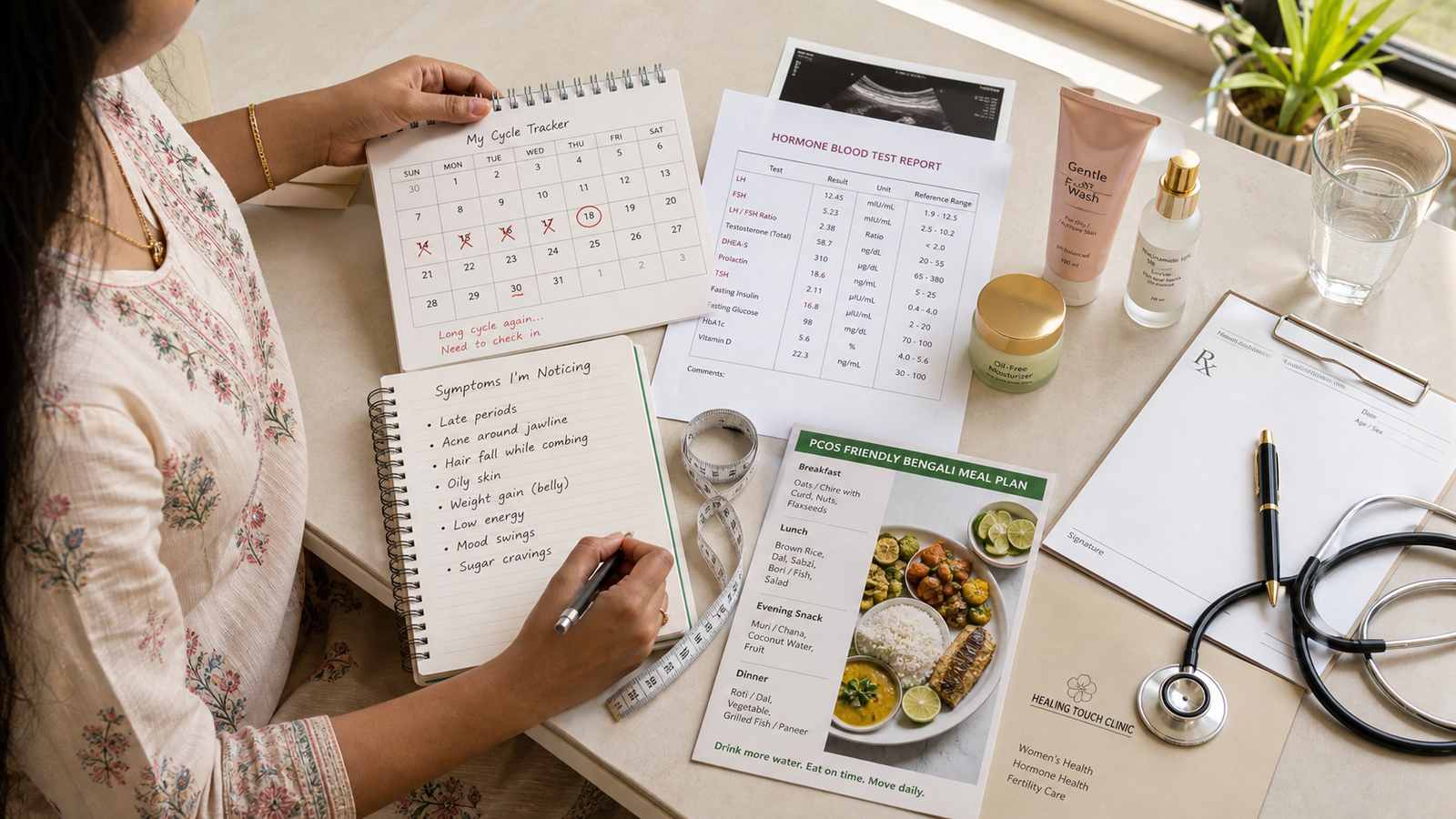
A useful pattern to notice:
| What you notice | Why it matters |
|---|---|
| Periods coming more than 35 days apart | May suggest irregular ovulation |
| Missed periods for two or more months | Needs hormone and pregnancy-related evaluation |
| Acne around the chin or jawline | Can be linked with androgen activity |
| Facial hair or scalp hair thinning | May point toward hormone imbalance |
| Belly weight gain or sugar cravings | May suggest insulin resistance |
| Trouble conceiving | Ovulation may not be regular |
One symptom does not confirm PCOS. A repeated pattern needs evaluation.
When Should You Meet a PCOS & PCOD Specialist in Kolkata?
You should meet a PCOS & PCOD specialist in Kolkata when missed periods keep repeating, acne does not settle, facial hair increases, weight gain becomes difficult to control, or pregnancy planning is affected by irregular cycles.
The goal is not only to “bring the period” with tablets. The real goal is to understand whether the problem is mainly hormonal, metabolic, ovarian, fertility-related, or a mix of these factors.
A proper evaluation usually includes cycle history, androgen symptoms, ultrasound, hormone tests, blood sugar assessment, weight pattern, family history of diabetes, and a treatment plan matched to the woman’s age and goals.
What PCOS Actually Means
PCOS is a hormonal and metabolic condition. It can affect ovulation, androgen levels, insulin response, skin, weight pattern, and fertility.
Many women hear “PCOS” and imagine cysts inside the ovary. That is not the full picture. The ovaries may show multiple small follicles on ultrasound, but the bigger issue is often irregular ovulation and hormone imbalance.
The World Health Organization describes PCOS as a common hormonal condition that may be linked with irregular periods, acne, excess facial or body hair, infertility, insulin resistance, obesity risk, and long-term metabolic concerns. You can refer to the WHO’s overview of polycystic ovary syndrome for a broader medical explanation.
In daily life, PCOS may look like delayed periods, oily skin, stubborn acne, sugar cravings, belly weight gain, hair growth on the face, hair thinning near the scalp line, or difficulty tracking fertile days.
PCOS vs PCOD: Why the Terms Confuse Patients
In India, many people use PCOS and PCOD interchangeably. Some patients are told that the PCOD is “mild” and PCOS is “serious.” That can create unnecessary confusion.
The better question is not which label sounds worse. The better question is: what is happening in this patient?
A woman may have irregular periods but no acne. Another may have acne and facial hair with only mildly delayed cycles. Someone else may have insulin resistance, weight gain, and difficulty conceiving. A scan may show polycystic-looking ovaries, but the diagnosis still needs to be matched with symptoms and blood reports.
Women searching for a PCOD Specialist in Kolkata should expect more than a one-line diagnosis from an ultrasound report. The plan should be based on cycle history, hormone profile, metabolic health, symptoms, age, and whether pregnancy is being planned.
Why Acne, Facial Hair and Weight Gain Should Not Be Ignored
Acne is not always PCOS. Weight gain is not always hormonal. Facial hair can have more than one cause.
But when these symptoms appear together with missed or irregular periods, they become clinically meaningful. Jawline acne, upper-lip hair, chin hair, oily skin, scalp thinning, and belly weight gain may point toward androgen and insulin-related changes.
The American College of Obstetricians and Gynecologists lists irregular menstrual periods, acne, excess hair growth, obesity, infertility, and ultrasound findings among common PCOS-related features. Their patient guide on polycystic ovary syndrome is useful for understanding why symptoms and treatment plans can differ from one woman to another.
A skin cream may calm acne temporarily. A diet may reduce weight for a few weeks. But if the cycle remains irregular and the hormone pattern is not checked, the same symptoms often return.
What Tests Are Usually Needed for PCOS or PCOD?
There is no single test that confirms everything.
A doctor may advise hormone tests, thyroid profile, prolactin, blood sugar assessment, insulin-related markers, lipid profile, and pelvic ultrasound. If pregnancy is possible, that needs to be ruled out first.
The exact test list depends on the patient. A teenager with irregular periods needs a different approach from a woman trying to conceive. A woman with facial hair and normal weight needs a different workup from someone with belly weight gain, dark neck patches, and a family history of diabetes.
At Healing Touch Clinic, we usually ask patients to bring previous ultrasound reports, old prescriptions, cycle dates, acne history, hair-growth changes, weight pattern, sleep routine, food habits, and fertility concerns. These details reduce guesswork.
Ultrasound Is Helpful, But It Is Not the Whole Diagnosis
Many women panic when the ultrasound report says “polycystic ovaries.” That phrase alone does not always mean the full syndrome is present.
Ultrasound can show ovarian appearance and follicle pattern. It can support the diagnosis when symptoms match. But PCOS should not be diagnosed from ultrasound alone.
Some women have symptoms even when the scan is not dramatic. Some young women may have polycystic-looking ovaries without a serious hormone problem. That is why the scan has to be read along with period history, acne, hair growth, weight pattern, and blood reports.
A good consultation should explain what the scan means and what it does not mean.
Insulin Resistance: The Part Many Women Miss
Insulin resistance means the body has difficulty using insulin efficiently. In PCOS, this can worsen weight gain, sugar cravings, tiredness after meals, acne, irregular ovulation, and androgen-related symptoms.
This is not limited to women who are overweight. Lean PCOS can also happen. But if there is belly weight gain, dark patches around the neck or underarms, repeated sugar cravings, fatigue after meals, or family history of diabetes, metabolic screening becomes more important.
For many Bengali households, the issue is not one food item. It is the pattern: rice-heavy meals, low protein, sweets after dinner, fried snacks with tea, long gaps between meals, late sleep, and low movement. None of these needs to be judged harshly. They need to be adjusted realistically.
A plan that fits daily life works better than a strict diet that collapses after one week.
PCOS and Fertility: When Pregnancy Planning Gets Delayed
PCOS can delay pregnancy because ovulation may not happen every month. If ovulation is irregular, fertile days become harder to predict.
This does not mean a woman with PCOS cannot conceive. Many do. The question is whether ovulation is happening, whether insulin resistance is controlled, whether weight and hormone levels need correction, and whether any other fertility factor is present.
Dr. Vinita Khemani often advises women not to wait silently for years if periods are irregular and pregnancy is being planned. Early evaluation can help decide whether cycle correction, ovulation tracking, medicines, lifestyle changes, or further fertility evaluation is needed.
If you want a simple symptom-first checklist before consultation, common signs that may point toward PCOS can help you organize what you are noticing without self-diagnosing.
PCOS and PCOD Care Near Newtown: Why Follow-Up Matters
For many women living or working around Newtown, Rajarhat, Salt Lake, or nearby Kolkata areas, the first concern is not a medical label. It is the daily disruption — periods that do not come on time, acne that keeps returning, weight that does not shift easily, or pregnancy planning that becomes stressful.
When someone looks for PCOS treatment in Newtown, she is usually looking for a doctor who can explain why these symptoms are happening together and what can be done step by step. PCOD treatment should not mean only a tablet to bring the next period. It should include cycle history, acne or hair-growth review, weight and insulin-resistance assessment, ultrasound interpretation, and follow-up based on the woman’s age and goals.
The same problem can affect women from any part of Kolkata. Newtown simply becomes relevant for patients who prefer consulting Dr. Vinita Khemani at Neotia Bhagirathi Woman and Child Care Centre, New Town, where she also visits for gynecology consultations. You can check the Neotia Bhagirathi Woman and Child Care Centre, New Town location on Google Maps before planning your visit with previous prescriptions, ultrasound reports, blood tests, and cycle history.
What a Sensible PCOS Treatment Plan Looks Like
PCOS treatment should not be copied from one patient to another.
A teenager with acne and delayed cycles needs a different plan from a woman trying to conceive. A woman with insulin resistance needs metabolic correction. Someone with regular periods but worsening hair growth needs a different discussion.
A treatment plan may include cycle regulation, acne and hair-growth management, insulin resistance correction, weight and lifestyle planning, ovulation support if pregnancy is planned, and long-term monitoring for sugar, cholesterol, and endometrial health.
For women comparing PCOS treatment in Kolkata, the more useful question is whether the plan includes cycle history, androgen symptom review, insulin-resistance screening, ultrasound interpretation, realistic lifestyle correction, and fertility guidance if pregnancy is being planned.
The goal is not just to “make the period come.” The goal is to make cycles safer, reduce symptoms where possible, protect metabolic health, and support fertility when needed.
Doctor’s Insight
Dr. Vinita Khemani often explains that PCOS is a pattern, not a one-report diagnosis. One missed period does not confirm it. One ultrasound line does not explain everything.
In consultation, she does not treat PCOS from an ultrasound report alone. She usually reviews the cycle gap, acne pattern, facial hair growth, weight changes, family history of diabetes, previous medicines, pregnancy plans, and blood reports before deciding whether the concern is mainly hormonal, metabolic, fertility-related, or a mix of all three.
At the Healing Touch Clinic, the aim is to avoid two common mistakes: ignoring symptoms for years, or starting hormonal tablets without understanding why the cycle is irregular.
FAQs
Can missed periods, acne and weight gain together mean PCOS?
Missed periods, acne and weight gain together can suggest PCOS, especially when the pattern repeats over several months. The diagnosis still needs proper evaluation because thyroid imbalance, high prolactin, stress, pregnancy, medication effects, and sudden weight changes can also disturb cycles. Track your period dates, acne pattern, weight change, and hair-growth symptoms before consulting a doctor.
Can PCOS happen even if I am thin?
PCOS can happen even if you are thin. Lean PCOS may still involve irregular ovulation, acne, excess hair growth, insulin resistance, or abnormal hormone levels. A doctor may still advise hormone testing, ultrasound, and metabolic screening if symptoms match.
What tests are usually done for PCOS or PCOD?
PCOS or PCOD evaluation may include hormone tests, thyroid and prolactin tests, blood sugar assessment, lipid profile, insulin-related testing, and pelvic ultrasound. The exact tests depend on age, symptoms, cycle pattern, acne, hair growth, weight changes, and pregnancy plans. Carry previous reports and cycle records so the doctor can avoid unnecessary repeat testing.
How do I control my PCOS?
PCOS is controlled through a combination of cycle regulation, weight and insulin-resistance management, acne or hair-growth treatment, and fertility planning if pregnancy is desired. The exact plan depends on symptoms, age, blood sugar risk, ultrasound findings, hormone reports, and whether periods are irregular or absent. Track your cycle dates, acne pattern, weight changes, food routine, and pregnancy plans before meeting your doctor.
At what age does PCOS start?
PCOS usually starts after puberty, but symptoms may become clearer in the late teenage years or early adulthood. Irregular periods are common for some time after periods first begin, so doctors usually look for persistent cycle problems along with acne, facial hair, weight changes, or abnormal hormone findings before confirming PCOS. If irregular periods continue more than a few years after menarche or symptoms are worsening, medical evaluation is safer than waiting.
What foods should I avoid with PCOS?
Women with PCOS should limit foods that worsen blood sugar spikes, such as sugary drinks, sweets, refined flour snacks, frequent fried foods, and large portions of low-fiber carbohydrates. Total restriction is usually not sustainable, so the better approach is to balance rice or roti with protein, vegetables, fiber, and regular meal timing. A doctor or dietitian can help adjust the plan based on weight, insulin resistance, cravings, activity level, and Bengali food habits.
What is the 30 30 30 rule for PCOS?
The 30-30-30 rule usually means eating about 30 grams of protein within 30 minutes of waking and doing 30 minutes of low-intensity exercise, but it is not a formal medical rule for PCOS. It may help some women build consistency with breakfast, protein intake, and movement, but it should not replace individualized PCOS treatment, especially if periods are absent, acne is severe, or fertility is being planned. Use it only as a lifestyle habit after checking whether it fits your health condition and doctor’s advice.
When should I see a specialist for irregular periods and acne?
You should see a specialist when irregular periods and acne keep recurring, especially if there is facial hair, weight gain, hair thinning, dark neck patches, or difficulty conceiving. These symptoms may point toward PCOS, but they can also overlap with thyroid, prolactin, pregnancy-related, or medication-related causes. A focused consultation can help decide which tests are needed and whether PCOS or PCOD treatment is appropriate.
Local Consultation for PCOS and PCOD Concerns in Kolkata
Women from different parts of Kolkata often visit Dr. Vinita Khemani when missed periods, acne, weight gain, facial hair, hair thinning, or fertility concerns begin affecting daily life. Healing Touch Clinic is based in Lake Town near Bangur Avenue and Shyam Mandir, with patients coming from Salt Lake, Newtown, Dum Dum, North Kolkata, Behala, and nearby areas; you can find Healing Touch Clinic Dr. Vinita Khemani on Google Maps before planning a visit with your reports.
Practical Next Step
Do not wait for the problem to become “serious enough.” Write down your last three to six period dates, acne pattern, hair-growth changes, weight changes, sleep routine, food habits, family history of diabetes, and whether pregnancy is being planned.
Bring your reports and questions to the consultation. A good PCOS plan starts with your actual pattern, not guesswork.
Have questions about this topic?
Book a consultation with Dr. Vinita Khemani to address your specific concerns and get a personalized care plan.