
For years, women dealing with irregular periods, acne, sudden weight gain, or fertility concerns were commonly told they had PCOS — Polycystic Ovary Syndrome. Recently, many doctors and women’s health researchers have started using a broader term: PMOS, or Polyendocrine Metabolic Ovarian Syndrome.
The shift is not simply about changing medical language. It reflects a growing understanding that this condition affects much more than the ovaries alone. Hormonal imbalance, insulin resistance, metabolism, inflammation, and reproductive health are often interconnected in ways that were not fully emphasized earlier.
Women looking for structured hormonal evaluation and personalized PCOS treatment often seek medical guidance when symptoms begin affecting menstrual health, skin changes, energy levels, weight management, or fertility planning.
What is the difference between PMOS and PCOS?
PMOS and PCOS describe the same underlying condition, but PMOS is considered a more medically accurate term because it highlights the endocrine and metabolic involvement beyond ovarian appearance alone. The updated terminology helps explain why symptoms such as insulin resistance, hormonal imbalance, irregular ovulation, and weight fluctuations often occur together.
Why many specialists now prefer the term PMOS:
- The condition affects hormones beyond the ovaries
- Metabolic health plays a major role
- Insulin resistance is commonly involved
- Symptoms may affect skin, weight, fertility, and menstrual cycles together
- The word “cyst” often creates confusion for patients
Why Doctors Started Moving Beyond the Word “PCOS”
One of the biggest problems with the older terminology is that many women immediately associate the condition with ovarian cyst surgery or severe ovarian disease.
We often meet women who spend years treating acne, fatigue, weight gain, or irregular periods separately before realizing these symptoms may actually be connected through underlying hormonal imbalance.
In reality, many women diagnosed with PCOS do not have problematic ovarian cysts in the surgical sense. The condition is usually linked more closely with:
- endocrine imbalance
- irregular ovulation
- insulin resistance
- androgen excess
- metabolic dysfunction
That broader hormonal and metabolic picture is one reason the medical community has gradually started using PMOS more frequently.
According to the National Institutes of Health (NIH) overview on PCOS, the condition may affect reproductive, metabolic, and endocrine health simultaneously.
PMOS Symptoms Often Extend Beyond Menstrual Health
Many women initially notice small hormonal changes that gradually become more disruptive over time.
Some experience irregular periods for years. Others struggle with persistent acne, hair thinning, unexplained fatigue, or difficulty managing body weight despite lifestyle changes.
Here’s how different symptoms may connect with underlying hormonal imbalance:
| Symptom | Possible Hormonal Connection |
|---|---|
| Irregular periods | Ovulation imbalance |
| Acne or oily skin | Elevated androgen levels |
| Weight gain | Insulin resistance |
| Hair thinning | Hormonal fluctuation |
| Fatigue | Metabolic imbalance |
Women searching for a trusted PMOS specialist in Kolkata are often trying to understand why multiple seemingly unrelated symptoms keep appearing together over time.
Why Insulin Resistance Is Getting So Much Attention
One of the biggest shifts in modern hormonal health management is the growing focus on insulin resistance.
Earlier, PCOS discussions focused mainly on menstrual cycles and ovarian appearance. Today, doctors increasingly recognize that insulin metabolism may influence symptom severity in many women.
We often see women with:
- persistent sugar cravings
- abdominal weight gain
- difficulty losing weight
- fatigue after meals
- fluctuating energy levels
Even women with relatively regular cycles may still experience metabolic symptoms linked with hormonal imbalance.
This is one reason treatment approaches now focus more heavily on long-term metabolic health rather than simply managing periods alone.
Dr. Vinita Khemani practices and discusses hormonal imbalance often including sleep quality, stress patterns, food habits, insulin response, and sustainable lifestyle changes instead of focusing only on short-term symptom control.
Why Early Hormonal Evaluation Matters More Than Many Women Realize
Many women normalize symptoms for years because they assume hormonal changes are simply “part of growing up” or everyday stress.
Across Kolkata, more women are now seeking earlier hormonal assessment because awareness around insulin resistance, metabolic health, and reproductive wellness has increased significantly among younger age groups.
Early hormonal evaluation often helps identify:
- ovulation irregularities
- endocrine imbalance
- insulin-related metabolic changes
- reproductive health concerns
before symptoms begin affecting long-term fertility or overall health.
Women seeking personalized hormonal care frequently benefit from structured evaluation instead of relying only on internet symptom comparisons.
How PMOS Is Usually Diagnosed
Diagnosis is rarely based on a single symptom or ultrasound report alone.
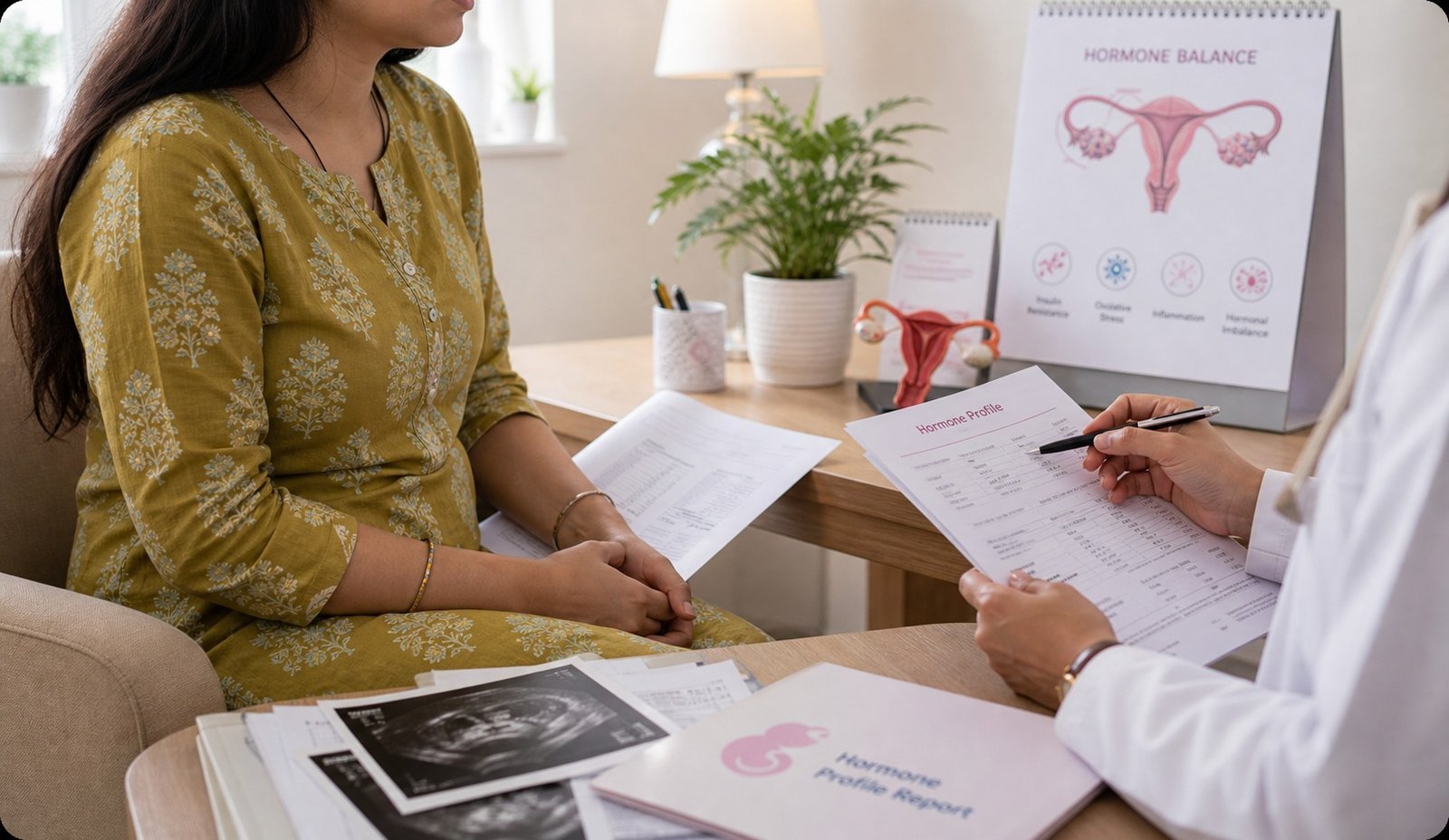
Doctors generally assess menstrual history, hormone patterns, metabolic indicators, and reproductive health together before confirming the condition.
Common investigations may include:
| Investigation | Purpose |
|---|---|
| Hormonal Blood Tests | Assess reproductive hormones |
| Pelvic Ultrasound | Evaluate ovarian appearance |
| Blood Sugar Evaluation | Detect insulin resistance |
| Thyroid Profile | Rule out endocrine overlap |
| Lipid Profile | Assess metabolic health |
Many women are surprised to learn that fatigue, skin changes, irregular cycles, and weight fluctuations may all originate from the same hormonal imbalance pattern.
PMOS Management Usually Requires a Long-Term Approach
One reason doctors increasingly prefer the term PMOS is because it encourages a broader treatment strategy rather than focusing only on periods or ovarian appearance.
Management plans often depend on:
- metabolic health
- age
- reproductive goals
- symptom severity
- insulin response
- lifestyle patterns
Some women require cycle regulation support, while others benefit more from insulin management, nutritional correction, or fertility-focused hormonal monitoring. Women seeking long-term hormonal balance often benefit from personalized monitoring plans that evaluate metabolic health, ovulation patterns, insulin response, and reproductive goals together instead of treating symptoms separately.
Women looking for individualized PCOS treatment often respond better to long-term hormonal management strategies rather than temporary symptom suppression alone.
Lifestyle Habits Can Influence Symptoms More Than Expected
Many women are surprised to discover how strongly sleep, stress, food patterns, and physical activity can influence hormonal symptoms.
We commonly see symptom fluctuations worsen during:
- irregular sleep schedules
- high stress periods
- rapid weight changes
- sedentary routines
- excessive ultra-processed food intake
Consistent lifestyle adjustments often help improve:
- insulin sensitivity
- ovulation patterns
- menstrual regularity
- inflammatory response
- energy levels
According to the World Health Organization’s women’s reproductive health guidance long-term lifestyle habits significantly influence both metabolic and reproductive health outcomes.
Why the PMOS Terminology Shift Actually Matters
For many women, the newer terminology creates a more accurate understanding of what is happening inside the body.
The older name placed most attention on ovarian appearance. PMOS shifts the conversation toward:
- endocrine health
- insulin regulation
- metabolism
- reproductive wellness
- long-term hormonal balance
That broader understanding often helps women connect symptoms that previously felt unrelated.
Experienced gynecologists, Dr. Vinita Khemani frequently encourage women not to ignore persistent hormonal symptoms simply because they appear manageable initially. Earlier evaluation often makes long-term management more structured and less overwhelming later.
Frequently Asked Questions About PMOS
Why are doctors changing the name from PCOS to PMOS?
Doctors are increasingly using PMOS because the condition affects endocrine and metabolic health beyond the ovaries alone. The newer terminology better reflects insulin resistance, hormonal imbalance, and reproductive involvement. Women experiencing persistent hormonal symptoms often benefit from earlier metabolic and hormonal evaluation.
Can someone have PMOS even if ultrasound scans look normal?
Yes. Some women may experience hormonal imbalance, ovulation irregularities, and metabolic symptoms even without significant ovarian changes on imaging. Diagnosis usually depends on combined clinical patterns rather than ultrasound findings alone. Hormonal blood tests and menstrual history often provide additional diagnostic clarity.
Why do women with PMOS struggle with weight changes so often?
Insulin resistance and hormonal imbalance may influence metabolism, appetite regulation, and fat storage patterns in many women with PMOS. Weight fluctuations often become more noticeable around the abdomen or during periods of stress and irregular sleep. Long-term symptom improvement usually requires consistent metabolic management rather than short-term dieting.
Can lifestyle changes actually improve hormonal symptoms naturally?
Yes. Consistent lifestyle changes may improve insulin sensitivity, ovulation regularity, sleep quality, and inflammatory response in many women with PMOS.
Better Awareness Often Leads to Earlier Diagnosis
Many women spend years assuming acne, fatigue, irregular periods, or sudden weight gain are isolated problems rather than connected hormonal symptoms. The shift from PCOS to PMOS is helping both doctors and patients understand the condition more holistically instead of focusing only on ovarian appearance.
Women across Bangur Avenue, Dumdum, Lake Town, and nearby areas of Kolkata often seek local hormonal health guidance when symptoms begin affecting daily life, reproductive health, or long-term wellness. You can also review Dr. Vinita Khemani’s physical business profile for clinic details, consultation information, and patient feedback.
Have questions about this topic?
Book a consultation with Dr. Vinita Khemani to address your specific concerns and get a personalized care plan.