

Can You Get Pregnant Again After a Family-Planning Operation?
A family-planning operation is usually chosen when a woman feels she does not want any more children. At that point in her life, the decision may feel right. But years later, circumstances can change.
Perhaps you have remarried. Perhaps your family circumstances are different now. Or perhaps you have simply started thinking about having another child.
Whatever the reason, one question may keep coming back: Is it possible to become pregnant again after a family-planning operation?
For some women, the answer is yes. A procedure called tubal recanalization, also known as tubal ligation reversal, may reconnect fallopian tubes that were previously blocked or divided during sterilization.
But there is an important distinction. Just because an operation can sometimes be reversed does not mean pregnancy will definitely follow.
Before deciding on another surgery, it helps to understand what was done during your original operation, how much healthy fallopian tube remains, and whether other factors could affect your ability to conceive.
Can a Family-Planning Operation Be Reversed?
Yes, some female sterilization operations can be reversed by reconnecting the fallopian tubes. Whether this is possible depends mainly on the original sterilization method, the condition and length of the remaining tubes, and the woman's current reproductive health.
Not every family-planning operation leaves enough healthy tissue for reconstruction.
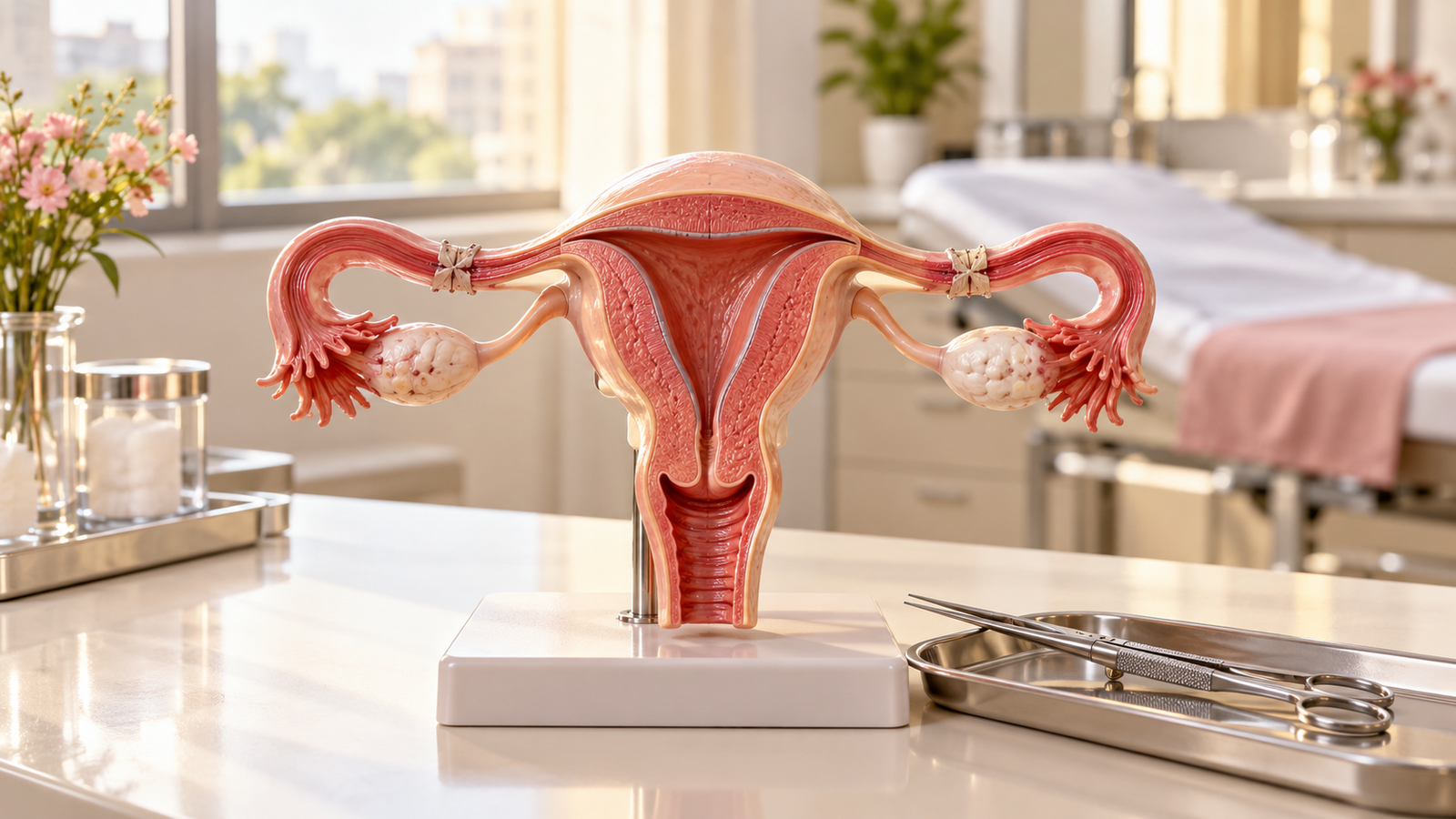
To understand why, consider what happens during sterilization. The fallopian tubes carry the egg from the ovary towards the uterus. They are also where fertilization usually occurs.
During female sterilization, these tubes are blocked, cut or sealed to prevent sperm from meeting the egg.
Reversal surgery attempts to restore a passage through the tubes. If the reconstructed tubes function properly, natural conception may become possible.
However, if too much of the fallopian tube was removed or damaged, reconnecting it may not be feasible.
This is why the first step should be a medical assessment, not a decision to undergo surgery immediately.
Your Previous Family-Planning Surgery Holds an Important Clue
Many women remember having a family-planning operation but do not know exactly how it was performed.
That is understandable, especially when the procedure took place several years ago or shortly after childbirth.
Yet the original technique can make a substantial difference when considering reversal.
Some sterilization procedures use clips or rings to block the tubes. Others involve cutting, tying or sealing sections of the fallopian tubes using heat.
These methods do not necessarily leave the same amount of healthy tissue behind.
If clips or rings were used, sufficient tubal length may remain for reconstruction. If large sections were removed or extensively cauterized, reversal can be much more difficult.
When both fallopian tubes have been completely removed, conventional tubal reversal is not possible because there is no remaining tube to reconnect.
This is one reason your previous operation records matter.
An old discharge summary, sterilization certificate or operative note may help the gynecologist understand the procedure used. If you no longer have those papers, mention this during consultation. The doctor can explain what information may still be obtained through your history, available investigations and surgical assessment.
You do not need to know every technical detail before seeking advice. But gathering whatever records you have can make that first conversation more useful.
Who May Be Suitable for Tubal Reversal Surgery?
The possibility of reversing sterilization is not determined by one test or by the number of years since the original operation.
Several factors need to be considered together.
Factor | Why it matters |
|---|---|
Original sterilization method | Determines how the tubes were blocked and how much healthy tissue may remain |
Remaining fallopian tube length | Sufficient healthy tissue is needed for surgical reconnection |
Woman's age | Egg quantity and quality generally decline with age |
Ovarian reserve | Helps guide fertility planning, although it cannot independently predict natural conception |
Partner's sperm health | Sperm-related fertility problems may reduce the benefit of reversal |
Previous pelvic surgery or infection | Scarring or adhesions may affect the operation and tubal function |
General medical condition | Helps assess whether surgery and a future pregnancy are medically appropriate |
Pregnancy history | Provides additional information about previous fertility and reproductive health |
One point deserves special attention: reconnecting the tubes and becoming pregnant are two different outcomes.
The surgeon may successfully join the separated portions, but the reconstructed tubes must also function adequately for natural conception.
The American Society for Reproductive Medicine explains that age, tubal anatomy, ovarian reserve, sperm quality and reproductive goals should all be considered when assessing sterilization reversal.
Its guidance also notes that surgeons may decide against reconstruction when the predicted remaining tubal length is very short, particularly below approximately 4 cm, or when other significant fertility problems are present.
This is not an absolute rule for every patient. It is one of several clinical considerations that influence the decision.
Does Age Matter if You Want Another Baby After Sterilization?
Yes, and this is something worth understanding before making plans for surgery.
Imagine two women who underwent family-planning operations in their twenties. One is now 31, while the other is 41.
Even if both have enough healthy fallopian tube for reconstruction, their chances of pregnancy may differ substantially because fertility changes with age.
The quality and number of eggs generally decrease as women grow older. This becomes particularly relevant after 35.
Reversal surgery may restore a pathway through the fallopian tubes, but it cannot restore the ovarian reserve or egg quality of an earlier age.
A doctor may review menstrual history, ultrasound findings and relevant blood tests to understand the broader fertility picture.
Tests such as anti-Müllerian hormone (AMH) may help with treatment planning in selected patients, but an AMH result alone cannot confirm or rule out the possibility of natural pregnancy.
For women in their late thirties or forties, it is particularly useful to discuss the expected benefits and limitations of surgery before committing time and resources to the procedure.
How Are the Fallopian Tubes Reconnected?
Reversal surgery involves carefully joining healthy portions of the fallopian tubes that were previously separated or blocked.
The procedure requires precision because the opening inside a fallopian tube is extremely narrow.
Depending on the patient's anatomy, previous surgery and the surgeon's assessment, reconstruction may be performed through a laparoscopic approach or another microsurgical technique.
In laparoscopic surgery, the surgeon operates through small abdominal incisions using a camera and specialised instruments.
During the operation, the surgeon examines the fallopian tubes, identifies the previously blocked areas and assesses whether suitable healthy segments are available.
If reconstruction is feasible, the tubal ends are prepared and carefully joined using fine sutures. The surgeon may also assess whether fluid can pass through the reconstructed tube.
Sometimes, the condition of the tubes becomes clearer only during the operation.
For example, substantial scarring or unexpectedly short tubal segments may make reconnection unsuitable even when the preoperative assessment appeared encouraging.
Women exploring advanced gynecological laparoscopic surgery should understand that not every sterilization reversal can or should be performed through keyhole surgery.
The appropriate technique depends on the individual case.
The aim is not simply to perform surgery through smaller incisions. It is to determine whether a safe, technically sound reconstruction is possible.
What Needs to Be Checked Before Considering Another Operation?
A woman seeking pregnancy after sterilization may naturally focus on the fallopian tubes. But the decision involves more than tubal anatomy.
The gynecologist will usually begin with a discussion of your previous family-planning operation, menstrual history, pregnancies, medical conditions and any prior abdominal or pelvic procedures.
A pelvic ultrasound may help assess the uterus and ovaries. Depending on age and clinical circumstances, additional fertility-related investigations may be suggested.
A semen analysis may also be relevant. This is because reconnecting the fallopian tubes would not address a significant sperm-related fertility problem.
In selected situations, the doctor may consider tests to assess the uterine cavity or tubal anatomy. However, no single investigation can always establish how much healthy tube remains after sterilization.
Some details can only be confirmed during surgical assessment.
If you are planning a consultation, bring your previous sterilization records, relevant ultrasound reports, medical prescriptions and details of any earlier pregnancy complications.
Even an old hospital discharge summary may provide useful information.
How Long Does Tubal Reversal Surgery Take?
Women considering another abdominal operation often worry about hospital admission, discomfort and time away from work or family responsibilities.
These are reasonable concerns.
The duration of tubal reversal surgery varies with the complexity of reconstruction, the condition of the tubes and the chosen surgical technique.
It may take several hours, particularly when delicate reconstruction or treatment of adhesions is required.
Recovery also varies.
Some patients undergoing minimally invasive surgery can return to lighter activities relatively soon, while others require a longer recovery period.
Small incisions do not mean that there is no internal healing.
Temporary abdominal discomfort, tiredness and soreness around the surgical wounds may occur after the operation.
The surgeon should explain the expected hospital stay, wound care, activity restrictions, follow-up schedule and appropriate timing for attempting pregnancy.
Do not assume that recovery advice given to someone else will apply to your operation.
Will You Become Pregnant Naturally After the Surgery?
Pregnancy may occur naturally after successful tubal reconstruction, but the operation cannot guarantee conception.
This is perhaps the most important expectation to understand.
A fallopian tube has more than one job. Apart from providing a passage, it helps transport the egg and early embryo towards the uterus.
A tube that appears open after surgery may not always function normally.
Pregnancy outcomes therefore depend on several factors, including the woman's age, the amount of healthy tubal tissue, the original sterilization method, sperm health and the quality of the reconstruction.
Published success rates vary considerably because studies involve different patient groups and surgical techniques.
It would be misleading to take a percentage from one study and assume it represents your personal chance of pregnancy.
There is also a specific risk that needs discussion before surgery: ectopic pregnancy.
This occurs when a pregnancy implants outside the uterus, most commonly inside a fallopian tube.
The risk is higher after tubal reconstruction than in pregnancies without this surgical history. ASRM reports ectopic pregnancy rates of approximately 4–8% in published studies of tubal anastomosis.
For this reason, early pregnancy monitoring is particularly important after reversal.
As explained in Cleveland Clinic's patient guidance on tubal ligation reversal, women should contact their healthcare provider after a positive pregnancy test so that appropriate assessment can be arranged.
Severe abdominal pain, fainting, shoulder-tip pain or significant bleeding during a possible pregnancy requires urgent medical attention.
What If the Fallopian Tubes Cannot Be Reconnected?
Sometimes, the assessment shows that reversal would be technically difficult, unlikely to provide meaningful benefit or impossible.
This can happen when extensive portions of the tubes were removed, severe scarring is present or other fertility factors substantially affect the chances of conception.
It does not mean the woman's wish to have another child is unreasonable. It means the available medical options need to be discussed realistically.
In such circumstances, a doctor may explain assisted reproductive options such as IVF, which does not require functioning fallopian tubes for fertilization.
That discussion should consider age, reproductive health, personal preferences and financial circumstances.
For women who hope to have more than one child, the potential longer-term value of successful tubal reconstruction may also be relevant.
There is no universal answer that makes reversal surgery the better choice for everyone.
A woman should be able to understand the expected benefits, limitations and alternatives before giving consent for any procedure.
Understanding the Cost of Tubal Reversal in Kolkata
The cost of tubal reversal surgery cannot be determined reliably from the procedure name alone.
It may vary according to hospital facilities, the surgical approach, anaesthesia, the complexity of reconstruction and the investigations required.
Some patients may need additional assessment because of previous abdominal surgery, pelvic adhesions or other medical conditions.
This is why a price quoted without reviewing the patient's medical circumstances may not reflect the eventual treatment requirements.
Before deciding on surgery, ask for an explanation of the proposed procedure and an estimate that distinguishes hospital charges, professional fees, investigations and follow-up expenses.
The decision should be based on whether the operation is medically appropriate, not simply on which procedure appears less expensive.
Planning Pregnancy After Sterilization: Start With the Right Information
Changing your mind about having another child does not erase the reasons you chose family planning earlier.
Life circumstances change, and reproductive decisions can change with them.
What matters now is understanding what is medically possible.
If you had a family-planning operation years ago and are considering another pregnancy, begin by finding your previous surgery records and arranging an appropriate gynecological assessment.
For women in Kolkata, Salt Lake, Lake Town, Bangur Avenue and nearby areas, Dr Vinita Khemani's gynecological services include assessment of advanced laparoscopic procedures, with tubal recanalization listed among the corrective surgeries discussed on her website.
An individual consultation can help clarify whether further investigation is needed, whether reconstruction may be technically feasible and which factors could affect future pregnancy planning.
There is no need to make a surgical decision before understanding the options.
A family-planning operation is intended to be permanent. In selected cases, reversal may be possible. The safest starting point is a careful review of your previous surgery and current reproductive health.
Medical Disclaimer: This article is intended for general patient education and does not replace an individual consultation, diagnosis or treatment recommendation. The feasibility and outcome of tubal reversal vary according to previous sterilization technique, age, tubal anatomy and other reproductive factors. Surgery does not guarantee pregnancy and carries risks, including ectopic pregnancy. Decisions about investigation, surgery and pregnancy planning should be made with a qualified medical professional.
Have questions about this topic?
Book a consultation with Dr. Vinita Khemani to address your specific concerns and get a personalized care plan.