

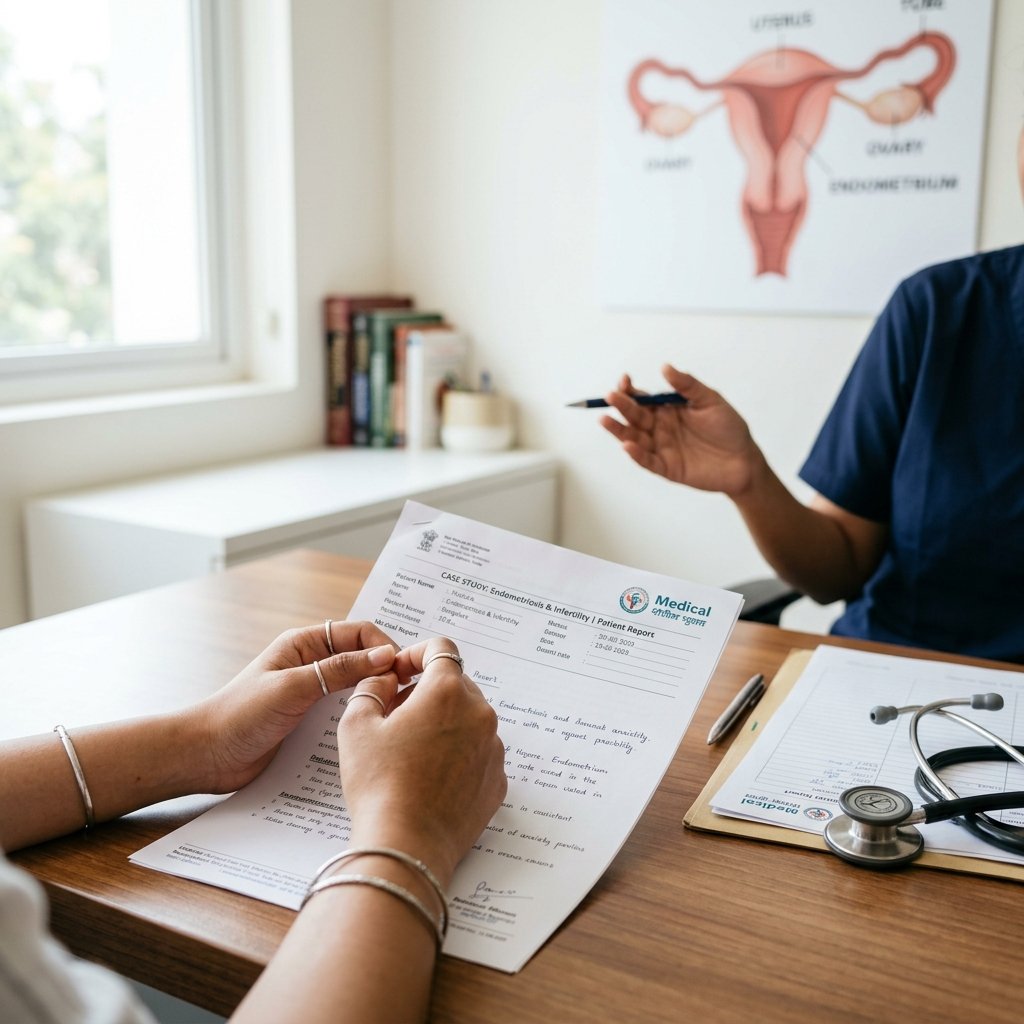
Trying to conceive but everything seems normal? You’re not alone. Many women go through months—or even years—of trying to get pregnant despite having regular periods and “normal” reports. This situation is often labeled as unexplained infertility. However, in clinical practice, one of the most commonly overlooked causes is endometriosis—a condition that can silently affect fertility without obvious symptoms.
Understanding how endometriosis impacts reproductive health is the first step toward timely diagnosis and effective treatment.
Why Many Women Struggle with Infertility Despite Normal Reports
It’s not uncommon to see patients with:
- Regular menstrual cycles
- Normal hormone levels
- No obvious abnormalities on basic scans
Yet, conception does not occur. This is often categorized as unexplained infertility, but in many such cases, underlying conditions like endometriosis may not be detected through routine evaluation. This is where deeper investigation becomes important.
What Is Endometriosis & Why It Often Goes Undiagnosed
Endometriosis is a condition where tissue similar to the lining of the uterus grows outside the uterus—commonly affecting the ovaries, fallopian tubes, and pelvic lining.
Why it is often missed:
- Symptoms may be mild or ignored
- Pain is normalized as “regular period pain”
- Early stages may not appear clearly on scans
Many women only discover it during fertility evaluation or laparoscopy. Women looking for endometriosis treatment in Kolkata are often diagnosed after months of unexplained symptoms or infertility.
How Common Is Endometriosis in Infertility Cases?
| Category | Estimated Percentage |
|---|---|
| Women with infertility | 30–50% may have endometriosis |
| Women with severe pelvic pain | 60–70% linked to endometriosis |
| Undiagnosed cases | Significant proportion |
These numbers highlight why endometriosis is considered a hidden but impactful cause of infertility.
Signs That Endometriosis May Be Affecting Your Fertility
Many symptoms are subtle but important. Common warning signs:
- Painful periods (dysmenorrhea)
- Pain during intercourse
- Chronic pelvic pain
- Irregular cycles
- Difficulty conceiving
Not every woman will have all symptoms, which is why diagnosis is often delayed.
How Infertility Doctors Diagnose Endometriosis
Diagnosing endometriosis requires a combination of clinical evaluation and targeted investigations.
Common diagnostic approaches:
- Ultrasound → initial screening
- Laparoscopy → gold standard for confirmation
- Hormonal and fertility tests
Experienced infertility doctors in Kolkata, including specialists like Dr. Vinita Khemani, often recommend advanced evaluation when standard reports appear normal but conception is delayed.
Treatment Options for Endometriosis-Related Infertility
Treatment depends on the severity of the condition, age, and fertility goals.
1. Medication
Hormonal therapy may help manage symptoms but is usually not a long-term fertility solution.
2. Laparoscopic Surgery
Minimally invasive surgery helps remove endometriotic tissue and improves reproductive function.
3. Fertility Treatments
- IUI (Intrauterine Insemination)
- IVF (In Vitro Fertilization)
Women consulting an endometriosis specialist in Kolkata are often guided toward a personalized plan that may include surgery or assisted reproductive techniques as part of fertility management in Kolkata.
When Is Surgery Recommended?
Surgery may be advised in the following situations:
- Severe pelvic pain
- Blocked fallopian tubes
- Presence of ovarian cysts (endometrioma)
- Failed previous treatments
In such cases, an experienced endometriosis surgeon in Kolkata can help improve fertility outcomes through targeted intervention.
Can You Get Pregnant After Treatment?
Yes—many women conceive successfully after appropriate treatment.
Expected Outcomes:
| Treatment Approach | Pregnancy Outcome |
|---|---|
| Mild cases | Natural conception possible |
| After laparoscopy | Improved fertility chances |
| IVF | Higher success rates |
The outcome depends on early diagnosis, severity, and treatment approach.
Why Early Diagnosis Matters for Fertility
Endometriosis is a progressive condition. Early diagnosis can:
- Prevent disease progression
- Preserve ovarian reserve
- Improve treatment outcomes
- Increase chances of natural conception
Delayed diagnosis may reduce fertility potential over time.
When Should You Consult a Specialist?
You should consider consulting a specialist if:
- You have been trying to conceive for 6–12 months without success
- You experience severe or persistent pelvic pain
- You have a history of ovarian cysts or suspected endometriosis
In such cases, consulting an experienced specialist like Dr. Vinita Khemani can help identify the underlying cause and guide the right treatment approach.
FAQs
Q1. Can endometriosis cause infertility?
Yes, endometriosis can affect fertility by causing inflammation, scarring, or blockage in reproductive organs. However, many women with mild endometriosis can still conceive with appropriate care.
Q2. Can I get pregnant naturally with endometriosis?
Yes, natural conception is possible, especially in mild cases. However, moderate to severe endometriosis may require medical or surgical intervention.
Q3. What is the best treatment for endometriosis-related infertility?
Treatment depends on severity and age. Options include laparoscopic surgery, fertility treatments like IUI/IVF, or a combination approach.
Q4. Is IVF necessary for endometriosis patients?
Not always. IVF is recommended when other treatments are unsuccessful or in advanced stages of the condition.
Q5. How is endometriosis diagnosed?
Laparoscopy is the most accurate method. Ultrasound and clinical evaluation are used as initial diagnostic tools.
Q6. Does surgery improve fertility in endometriosis?
Yes, in many cases, removing endometriotic tissue improves the chances of conception, especially in moderate cases.
Q7. How long does it take to conceive after treatment?
It varies. Some women conceive within months, while others may require assisted reproductive techniques.
Q8. Can mild endometriosis affect pregnancy chances?
Yes, even mild endometriosis can impact fertility, although the effect is usually less significant than in advanced stages.
Q9. What are early signs of endometriosis?
Common early signs include painful periods, pelvic discomfort, and pain during intercourse.
Q10. When should I see an infertility specialist?
If you have been trying to conceive for 6–12 months without success or have symptoms of endometriosis, consultation is recommended.
Final Thoughts
Endometriosis often remains hidden behind “normal” reports, making it one of the most overlooked causes of infertility.
The key lies in awareness, timely diagnosis, and a personalized treatment approach. With the right care, many women successfully overcome this challenge and achieve pregnancy.
Have questions about this topic?
Book a consultation with Dr. Vinita Khemani to address your specific concerns and get a personalized care plan.