
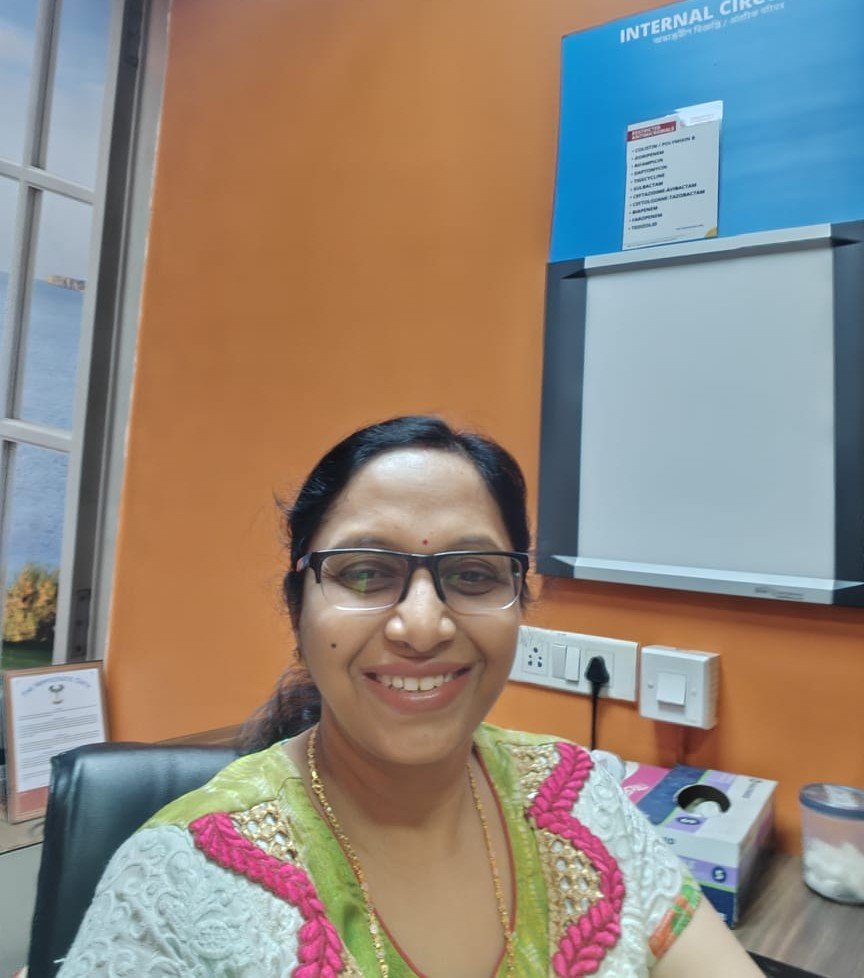
Medically reviewed by Dr. Vinita Khemani, Senior Gynecologist & Obstetrician
Last updated: June 2026
Pregnancy does not come with a clear alarm bell. One day the swelling feels normal, the next day a headache refuses to settle. A baby may be quieter for a few hours, or there may be spotting that makes the whole family anxious.
If you are looking up warning signs in a high-risk pregnancy, you are probably not reading casually. You may already be wondering, “Should I call my doctor now?” or “Can this wait till tomorrow?”
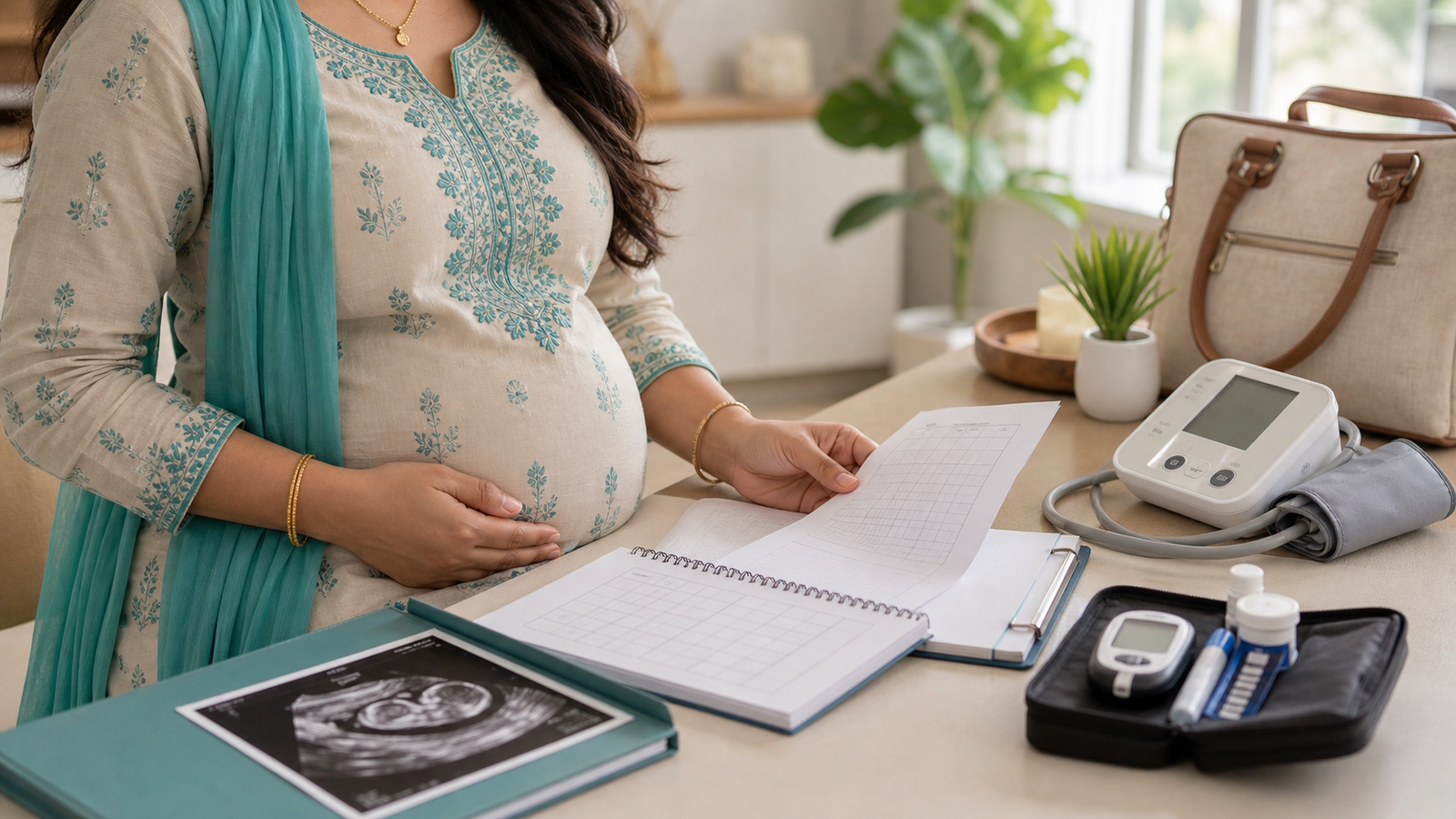
At Healing Touch Clinic, we see this often. Mothers come with BP readings written on small papers, screenshots of sugar logs, ultrasound reports folded into a file, or one line from a scan that has scared them. For mothers already being monitored because of hypertension, diabetes, twin pregnancy, previous miscarriage, fetal growth concerns, age above 35, or placental issues, a structured high-risk pregnancy monitoring plan helps connect symptoms with reports, scans, BP trends, sugar levels, and delivery readiness.
What are warning signs in a high-risk pregnancy?
Warning signs in a high-risk pregnancy include bleeding, leaking fluid, severe headache, blurred vision, sudden swelling, reduced baby movement, severe abdominal pain, breathlessness, chest discomfort, fainting, fever, and repeated vomiting. These signs need quicker attention when the mother already has high BP, diabetes, twins, previous pregnancy loss, placental concerns, or poor fetal growth.
A simple way to think about it:
Do not wait at home if there is heavy bleeding, water-like leakage, severe belly pain, chest pain, breathing difficulty, fainting, fever, or baby movement clearly slowing down after movements have become regular.
Call your doctor the same day if BP readings are repeatedly high, headache is not settling, vision feels blurred, face or hands are suddenly swollen, vomiting is persistent, or sugar levels are repeatedly outside the advised range.
Observe only if it is mild and familiar—for example, tiredness that improves with rest or mild swelling already discussed during antenatal visits. If the symptom feels new, stronger, or unusual for you, treat it differently.
A small change can matter more in a high-risk pregnancy in Kolkata
A high-risk pregnancy is not always dramatic. Many mothers look completely fine while their BP, sugar, Doppler report, or fetal growth scan says the pregnancy needs closer watching.
In Kolkata, one practical issue is travel time. A mother coming from Salt Lake, Dum Dum, New Town, Behala, Lake Town, or North Kolkata may lose valuable time if the family first debates the symptom, then searches online, then looks for reports, then decides where to go. This is why Dr. Vinita Khemani often advises high-risk mothers to keep one pregnancy file ready and to report symptoms early, not after they become severe.
The question is rarely, “Is this definitely dangerous?”
The better question is, “Is this new, persistent, worsening, or connected to my known risk factor?”
That question prevents delay.
Bleeding or watery discharge needs a clear answer
Bleeding during pregnancy can happen for different reasons, but in a high-risk pregnancy it should not be casually watched. Light spotting, brown discharge, fresh red bleeding, bleeding with cramps, or bleeding with reduced movement are not the same situation. The doctor needs details.
Watery discharge is another symptom mothers often hesitate to report because it may feel embarrassing or confusing. Some describe it as repeated wetness. Some say it feels like urine. Some feel a sudden gush. A medical review helps check whether it is normal discharge, urine leakage, infection-related discharge, or amniotic fluid leakage.
When a mother calls with bleeding or fluid leakage, the first few answers matter: pregnancy week, amount of bleeding, pain, fever, baby movement, last scan finding, and whether there was any known placenta-related concern.
A severe headache is not just “pregnancy stress”
Mild headaches are common. A headache that feels intense, stays despite rest, returns repeatedly, or comes with blurred vision is different.
High BP and preeclampsia can show up through headache, visual disturbance, sudden swelling of the face or hands, upper abdominal pain, nausea, vomiting, breathlessness, or a general feeling that something is wrong. ACOG’s patient guidance on preeclampsia and high blood pressure during pregnancy also highlights symptoms such as headache that will not go away, vision changes, upper abdominal pain, nausea, vomiting, sudden swelling, and breathing difficulty.
If you have a BP machine at home, note the number and time. Do not say “BP was high” from memory if you can avoid it. A reading taken at 9 am with a headache is more useful than a vague estimate shared hours later.
Reduced baby movement is a mother’s signal, not an overreaction
Many mothers know their baby’s rhythm. Some babies move more after food, some at night, some after the mother rests. Once that rhythm is established, a clear reduction should be checked.
Reduced movement does not always mean danger, but it is one symptom where delay is not worth the risk. Depending on the pregnancy week and clinical history, the doctor may advise fetal heart monitoring, ultrasound, Doppler assessment, or a non-stress test.
The CDC includes baby’s movement stopping or slowing down among urgent maternal warning signs, along with severe headache, vision changes, fever, severe abdominal pain, chest pain, trouble breathing, and fainting. CDC urgent maternal warning signs are useful for families because they explain symptoms that should not be dismissed.
Diabetes risk can stay quiet until reports show the problem
Gestational diabetes does not always feel like an emergency. Many mothers with high sugar readings feel normal. That is exactly why reports matter.
If fasting or post-meal sugar readings are repeatedly outside the range your doctor has set, do not wait for the next routine visit without informing the care team. Excessive thirst, repeated infections, unusual tiredness, excessive fetal growth, high amniotic fluid, or sudden scan changes may change the pregnancy plan.
High risk pregnancy treatment in Kolkata should include regular sugar review, diet correction, fetal growth tracking, BP checks, and delivery planning when needed. It should not begin only after an emergency.
Twin pregnancy needs earlier reporting
Twin pregnancies can progress beautifully, but they need closer observation. The mother may feel heavier sooner, more breathless, and more tired. That makes it easy to miss a symptom that deserves attention.
Bleeding, pelvic pressure, early contractions, sudden swelling, severe breathlessness, high BP symptoms, or reduced movement should be reported promptly. Some twin pregnancies also need more frequent scans for growth difference, fluid levels, placental sharing, and cervical length.
The aim is not to make the mother fearful. The aim is to avoid late recognition.
Age, previous loss, IVF, and existing illness change the meaning of symptoms
The same symptom can mean different things in different pregnancies. Mild swelling in one mother may be routine. Sudden swelling with high BP in another mother may need urgent assessment.
Mothers above 35, women with previous miscarriage or preterm delivery, IVF pregnancy, thyroid disorder, hypertension, diabetes, placental concerns, or fetal growth restriction need individualized monitoring. Pregnancy after the age 35 often needs a more careful antenatal schedule even when the mother feels well.
Similarly, abdominal pain in a pregnancy with a known cyst should not be judged like ordinary stretching pain. If there is a history of ovarian cyst during pregnancy, pain pattern, cyst size, scan findings, and pregnancy week all matter.
For a broader understanding of risk factors, the high-risk pregnancy care in Kolkata explains why some pregnancies need closer supervision from the start.
What we usually ask when a mother calls with a symptom
A doctor cannot safely judge urgency from “I am not feeling well.” Details make the difference.
We usually ask how many weeks pregnant you are, what changed today, whether there is bleeding or fluid leakage, whether baby movement feels normal, what the latest BP reading is, whether there is headache or blurred vision, and whether sugar readings have been unusual. We also ask about fever, abdominal pain, vomiting, swelling, previous pregnancy problems, and the latest scan.
This may sound basic, but in real situations families often panic and forget simple details. Keep your reports nearby. If possible, write down the symptom time, BP reading, sugar reading, and baby movement change before calling.
A high risk pregnancy doctor in Kolkata can guide you better when the information is clear.
Emergency readiness is not panic
Emergency readiness simply means your family knows what to do if a warning sign appears.
Keep one file with your latest ultrasound, blood reports, BP readings, sugar logs, blood group, current medicines, allergies, previous delivery notes, and doctor’s instructions. Your partner or family member should know where this file is kept.
This is especially useful in Kolkata, where the decision may involve clinic review, diagnostic testing, or hospital evaluation depending on the symptom and travel time.
Why NICU-backed planning may be discussed before delivery
Not every high-risk pregnancy needs NICU support. Some pregnancies, however, should be planned with newborn readiness in mind.
This may apply in cases of preterm risk, twin pregnancy, diabetes, fetal growth restriction, high BP complications, reduced fluid, or suspected fetal distress. NICU-backed planning does not mean something bad is expected. It means the baby’s possible needs are considered before labour begins.
That planning can affect where delivery is safest, how soon the baby should be checked, and whether pediatric support should be available at birth.
Doctor’s Insight
Dr. Vinita Khemani often reminds mothers that high-risk pregnancy care is not about reacting to one frightening symptom in isolation. It is about reading patterns: BP trend, swelling, sugar values, scan growth, Doppler findings, baby movement, pain, and bleeding history.
At Healing Touch Clinic, we prefer early reporting over late panic. Many times the review reassures the mother. Sometimes it catches a problem early. Both outcomes are better than waiting too long.
FAQs
What symptoms should make me call my doctor immediately in a high-risk pregnancy?
Sudden bleeding, fluid leakage, severe headache, blurred vision, reduced baby movement, severe abdominal pain, breathlessness, chest pain, fever, fainting, or repeated vomiting should be reported immediately. These symptoms need faster review when the mother has high BP, diabetes, twins, previous pregnancy loss, placental concerns, or fetal growth issues. Keep your latest reports ready and contact your obstetrician or emergency unit without waiting for the next appointment.
How do I know if reduced baby movement is serious or just a quiet day?
Reduced baby movement is serious when the baby’s usual pattern clearly slows down or stops after movements have become regular. Movement can vary, but persistent reduction should be checked with fetal heart monitoring, ultrasound, Doppler assessment, or a non-stress test depending on pregnancy week. Call your doctor the same day if the pattern feels clearly different.
Is high blood pressure in pregnancy always dangerous?
High blood pressure in pregnancy needs medical attention because it can increase the risk of preeclampsia, placental problems, preterm birth, and fetal growth issues. The risk depends on the BP number, pregnancy week, urine protein, symptoms, blood tests, and fetal growth status. Share repeated high readings, headache, swelling, vision changes, or upper abdominal pain with your doctor promptly.
Do all high-risk pregnancies need delivery in a hospital with NICU support?
Not all high-risk pregnancies need NICU care, but some need delivery planning where newborn support is available. This is more likely with preterm risk, twins, diabetes, growth restriction, high BP complications, reduced fluid, or fetal distress concerns. Your obstetrician can decide the delivery setting after reviewing scans, gestational age, maternal condition, and baby’s growth.
Local Pregnancy Risk Evaluation in Kolkata
Mothers from different parts of Kolkata visit Dr. Vinita Khemani when a BP reading, sugar report, scan finding, bleeding episode, or change in baby movement creates uncertainty. Healing Touch Clinic is based in Lake Town near Bangur Avenue and Shyam Mandir, with patients coming from Salt Lake, Dum Dum, New Town, North Kolkata, Behala, and nearby areas; you can find Healing Touch Clinic Dr. Vinita Khemani on Google Maps before planning a visit with your reports.
Practical Next Step
Keep your latest scan, blood tests, BP readings, sugar logs, medicines, and emergency contact details in one place. If a symptom is new, severe, persistent, or different from your usual pregnancy pattern, get it reviewed. In a high-risk pregnancy, early assessment is often the safer decision.
Have questions about this topic?
Book a consultation with Dr. Vinita Khemani to address your specific concerns and get a personalized care plan.